6 Planets To Align In Rare Celestial Event On Feb 28, 2026, Visible To Naked Eye And Telescopes
Key Takeaways
- Six planets will occupy the same sector of the sky on February 28, 2026.
- Mercury and Saturn remain difficult to spot due to their proximity to the horizon and the setting sun.
- Uranus and Neptune are invisible to the naked eye, requiring specialized optical equipment.
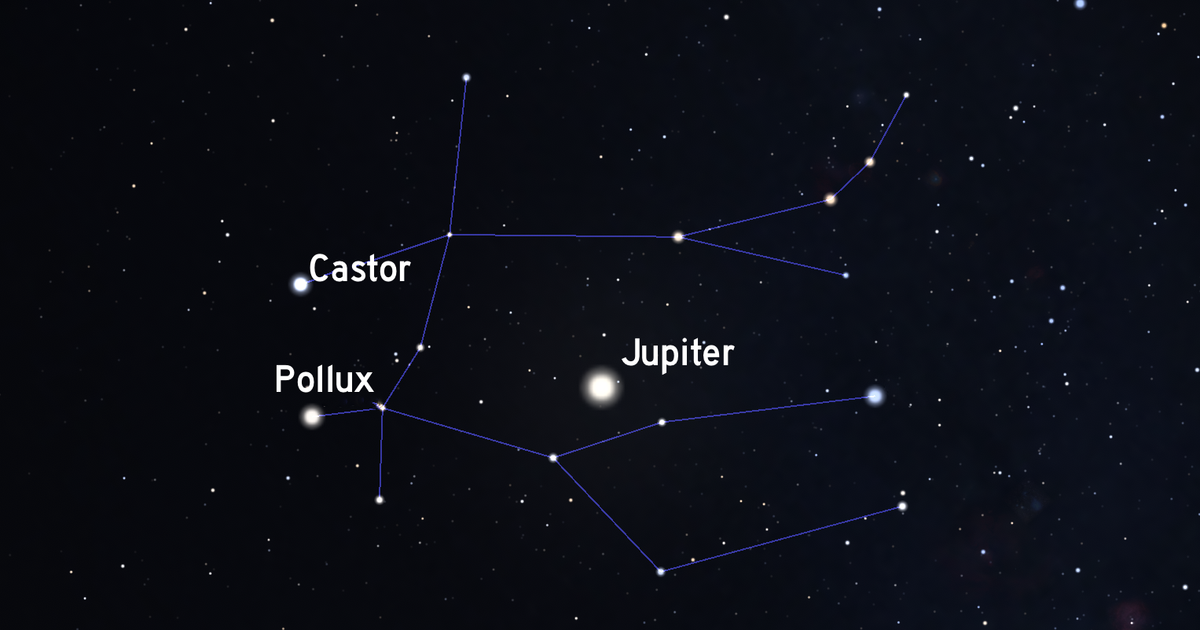
- Jupiter serves as the primary focal point, positioned high in the constellation Gemini near the stars Castor and Pollux.
Table of Contents
The Origin Story
The calculation began in the silence of digital observatories where orbital mechanics dictate the theater of the night.
Astronomers tracked the elliptical paths of six wandering bodies, noting a rare moment when their trajectories would appear to bunch together from the perspective of a human standing on the cooling crust of Earth. This alignment is not a physical gathering in space but a trick of geometry. It is a promise of order.
The announcement moved from specialized journals to the wider public, carrying with it the weight of anticipation that always accompanies the movement of spheres. People looked for meaning in the math.
The Mechanics of Shadows
The sky is deceptive. While the maps suggest a crowded ballroom of celestial entities, the reality of the atmosphere is often less cooperative.
Mercury and Saturn sit low. They linger in the terminal glow of the sun, fighting the stubborn haze that clings to the world’s edge. An observer has roughly sixty minutes to find them before they slip behind the treeline or the silhouette of a distant roof. Precision is required. For most, these planets will remain ghosts in the orange light of dusk.
The light is fleeting.
Uranus and Neptune exist as mere data points for the casual viewer. They do not reveal themselves to the unaided eye. To see them, one must possess a telescope and the patience to navigate the vast, dark voids between the brighter stars. These outer giants are cold and indifferent to the excitement on the ground.
They stay hidden. The distance between the viewer and the planet is measured in billions of miles, a gap that the human eye cannot bridge without the assistance of polished glass and steady hands.
The Giant in Gemini
Jupiter does not hide. It hangs nearly overhead, a steady and unblinking eye that dominates the constellation Gemini. It is the reliable performer in an otherwise elusive cast.
To its left, the stars Castor and Pollux stand as quiet sentinels in the winter air. Even a modest pair of binoculars will reveal the Galilean moons, four small sparks of light that have been circling the gas giant since before men began keeping records. The view is clear. Jupiter remains visible from the moment the sun vanishes until the first light of dawn begins to erase the stars.
The Horizon’s Edge
Visibility is a matter of geography.
To see the lower planets, one must seek the high ground or the flat, unobstructed expanse of a Great Lake or a dormant winter field. In the suburbs, the parade is muffled by the architecture of daily life. Trees block the view. The expectation of a grand procession often ends in the simple, quiet observation of a single, bright planet riding high in the west.
This is enough. There is a specific joy in knowing the other planets are there, even if they choose to remain tucked behind the curve of the world.
Eleven days remain until the orbital intersection on February 28, 2026. Gravity holds firm. While earlier data prioritized the positions of the primary six planets, updated telemetry highlights the supporting role of Mars, currently positioned in the constellation Cancer. It glows with a distinct, steady ochre light.
Modern sensors detect what the human eye misses. The waxing gibbous moon will also be present in the eastern sky, providing enough illumination to navigate rural terrain without compromising the view of the brighter planetary targets.
Light persists. Observers using digital tracking software can now synchronize their equatorial mounts to follow the precise arc of the ecliptic where these bodies cluster.
Software bridges the gap between biological limitations and cosmic scale. Jupiter remains the most accessible target for urban observers. It dominates the zenith. Even with high levels of light pollution, the planet’s brightness cuts through the artificial haze of the city, offering a reliable calibration point for those testing new optical equipment before the main event.
Behind the Scenes: The Calculation of Orbits
Precision is mandatory.
The data used to predict this alignment originates from the Jet Propulsion Laboratory’s Horizons system, a highly accurate database of solar system dynamics. Math never lies. Researchers utilize numerical integration to account for the gravitational tug of every major body in the solar system, ensuring that the predicted positions of Mercury and Saturn are accurate to within seconds of arc.
Computers crunch numbers. This process involves solving complex differential equations that simulate the movement of the planets over decades. Silence fills the server rooms. The result is a roadmap for the night sky that allows humanity to anticipate geometry years before the light reaches our eyes.
Technical Preparation
Glass must be clean.
For those attempting to capture the faint signatures of Uranus or Neptune, sensor cooling is vital to reduce electronic noise in long-exposure frames. The atmosphere moves. Cold air is usually steadier than warm air, making the February chill an advantage for high-resolution imaging. Lenses focus. Using a wide-angle lens will allow for the inclusion of the surrounding constellations, providing the necessary context for the planetary grouping within the larger framework of the Milky Way galaxy.
Checklist of Important Points
- Verify the local sunset time to maximize the sixty-minute window for Mercury and Saturn.
- Charge all external power banks for motorized telescope mounts and camera batteries.
- Identify a location with a clear western horizon, free from buildings or dense tree lines.
- Download an offline star map or ephemeris app to maintain navigation in remote areas.
- Pack high-contrast filters to improve the visibility of planetary disks against the twilight glow.
Additional Reads
- Atmospheric Extinction Tables: Understanding how the thickness of the air dims light near the horizon.
- The 2026 Mars Opposition Report: Detailed analysis of the Red Planet’s brightness and proximity during the late winter months.
- Sensor Sensitivity Calibration: A guide to optimizing ISO settings for deep-sky planetary photography.
- Light Pollution Mapping: Global databases for finding the darkest skies in your immediate region.
Related materials: Visit website
Have thoughts on this article?
Send your feedback. Spotted a factual error or typo? Use this form to let us know. We use your feedback to improve our reporting. Thank you!
