A Scientific Perspective On Near-Earth Asteroids
The Celestial Wanderer’s Silent Passage
The watchmen observe.
Upon the velvet canvas of the firmament, the Jet Propulsion Laboratory monitors a specimen of extraordinary antiquity, a hundred-foot testament to the chaotic genesis of our planetary neighborhood. This visitor, designated 2026 CC, possesses the dimensions of a modern aircraft and moves with a grace that defies its rugged, metallic constitution.
It represents a lingering echo from four point six billion years ago. To the disciplined mind, the arrival of such a fragment is not an omen of calamity but a spectacular opportunity for the deduction of universal truths.
A Proximity of Remarkable Precision
Distance provides perspective.
The asteroid shall traverse the void at a distance of three hundred seventy-nine thousand miles, a span that comfortably exceeds the orbit of our own lunar companion.
One finds a peculiar comfort in the mathematical certainty of these orbital mechanics, which ensure our safety while permitting a glimpse into the deep history of the solar system. We are fortunate to inhabit an age where the invisible is made visible by the tireless scrutiny of our telescopes. The silent vacuum between worlds acts as a sanctuary for these rocky derelicts, preserving the secrets of our origins within their dusty, metallic hearts.
The Vigilance of Science
Observation precludes fear.
While the swift rotation of objects like the massive 2025 MN45 might stir the imagination of the uninitiated, the rigorous application of orbital dynamics confirms a future free of collision.
We perceive these near-Earth objects not as threats, but as fellow travelers in a vast, intricate dance choreographed by gravity itself. It is a profound triumph of human intellect to predict the path of a stone through the dark with such unerring accuracy. Our survival is woven into our curiosity.
Overheard
“The precision of the JPL calculations is quite remarkable, is it not?”
“Indeed, to track a hundred-foot rock across such a staggering expanse is a feat of the highest order.”
“It is merely a matter of light and mathematics.”
Yes, but
The proximity of 379,000 miles seems intimate in the context of the cosmos.
However, one must remember that space is extraordinarily empty, and this distance represents a vast buffer that ensures our continued tranquility. While 2026 CC is classified as a near-Earth object, its “nearness” is a relative term used by astronomers to define its orbital neighborhood rather than an immediate physical encounter.
Did you know?
- Asteroids are the discarded building blocks of the solar system, composed of the same materials that formed the very ground beneath our feet.
- Most of these celestial bodies reside in the main belt between Mars and Jupiter, yet a few adventurous stones drift into the inner circles of our system.
- The fastest-spinning asteroids can complete a full rotation in a mere two minutes, a dizzying speed for an object the size of eight football fields.
Clarity brings peace.
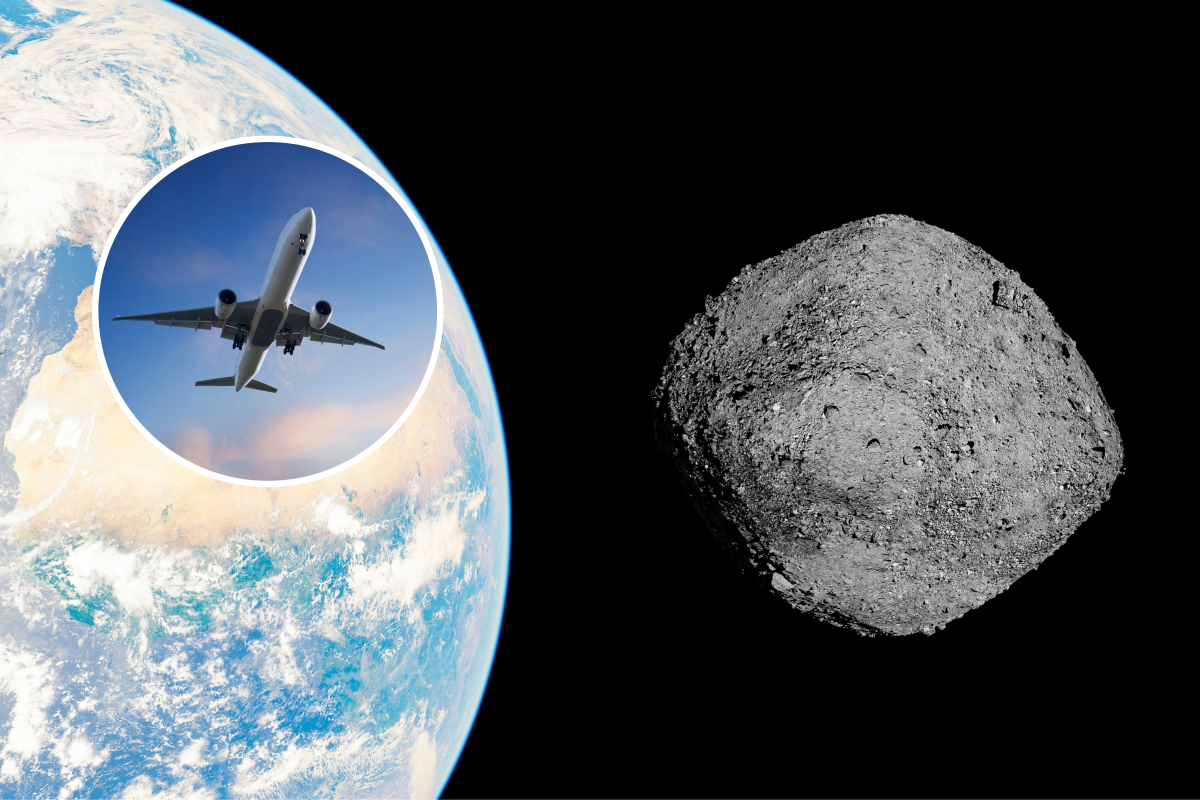
The space rock known as “2026 CC” measures around 100 feet in diameter. It is projected to make its closest approach tomorrow at around 379,000 …
Other references and insights: See here
 Approved by the Army of the Alien Monkeys