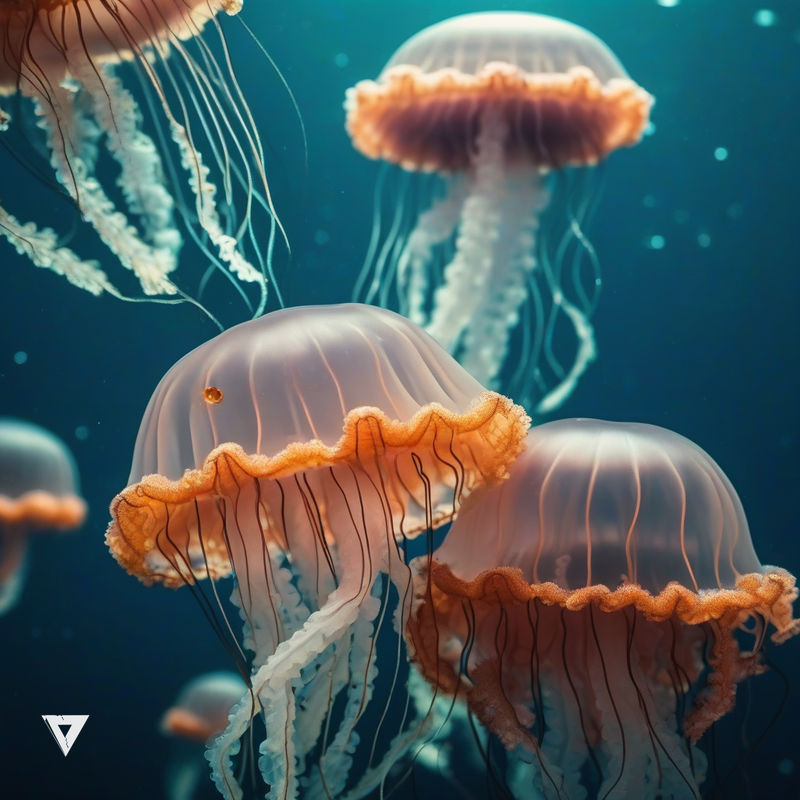
Look at these numbers because they will absolutely blow your mind. A team of scientists just pulled off a biological miracle in the Atlantic Ocean. They found 31 brand new species of animals in a mere 14 days. That is more than two new species a day! For comparison, finding just one new species usually takes months or even years of painstaking search.
Under the leadership of Dr. Karen Osborn from the Smithsonian National Museum of Natural History, this crew turned the research vessel Falkor (too) into a fast-paced discovery machine.
Just like that, our tree of life got a lot bigger, thanks to a technological leap that changed how we observe the deep.
Inside The High Tech Floating Lab Secrets
To understand how this speed run was possible, we have to look at the incredible technology on board. In the past, scientists had to preserve fragile, watery animals in chemicals and wait weeks to look at them under a microscope back on land, where the poor creatures often turned into mush. But this team used a custom-built, spinning-laser microscope nicknamed the Squid right on the rocking ship to scan living cells in three dimensions before the fragile specimens fell apart.
This allowed researchers to watch cells exchange food and build skeletons live while floating on the ocean, proving to be a massive game-changer for marine science and unlocking unprecedented views of the bizarre creatures inhabiting the twilight zone.
New Discoveries Shaking Up Ocean Science Right Now
Armed with this new imaging power, the team pulled extraordinary beasts out of the dark. They found nine new jellies, seven colonial siphonophores, and four larvaceans. Now, larvaceans are absolutely wild because they are tiny tadpole-like creatures that build giant houses out of their own snot. Even crazier, these weird little builders are actually closer relatives to humans than they are to crabs or worms because they have a nerve cord. They also snagged giant rhizarians, which are single-celled organisms so big you can actually see them with your bare eyes. While these creatures look alien, their daily life cycles play a surprisingly massive role in our global climate.
Why Tiny Jelly Mucus Houses Change Global Warming Calculations
This connection becomes clear when we look at how those larvacean mucus houses impact the carbon cycle. When the houses get clogged with tiny bits of organic waste, the animals abandon them, and they sink rapidly to the deep seafloor. According to research published by the Monterey Bay Aquarium Research Institute, this process acts as a massive carbon conveyor belt. By finding four new species of these creatures in the Atlantic midwater, we now realize the ocean's carbon pump is far more active than previously estimated, locking away greenhouse gases that would otherwise warm our atmosphere.
Studying the midwater is therefore crucial to understanding how our planet breathes.
To appreciate how this rapid breakthrough unfolded, we can look at the expedition's day-by-day progression.
A Timeline Of Rapid Midwater Exploration Milestones
On June 12, 2026, the research vessel Falkor (too) departed Salvador, Bahia, heading straight into the open waters of the South Atlantic.
By June 18, 2026, the engineering team successfully calibrated the Squid confocal microscope to counteract the heavy rolling of the ship's hull.
On June 22, 2026, the taxonomic team confirmed the discovery of the fast-moving gossamer worm, marking the midpoint of their rapid-fire identification streak.
On June 26, 2026, the Schmidt Ocean Institute officially announced the successful identification of all 31 new species, setting a blazing fast precedent for deep-sea biology. This rapid success has opened up entirely new areas of inquiry for oceanographers trying to understand the deep ocean.
Big Questions About The Earth Largest Habitat
- How do high-pressure midwater environments affect the delicate cellular walls of single-celled giant rhizarians?
- Can we adapt the spinning disk laser technology of the Squid for other extreme environments like space exploration?
- How does the bioluminescent signaling of the newly discovered ctenophore cilia compare to known shallow-water species?
To find these answers, check out these excellent resources:
- Read about deep-sea physics and cell structures on the Nature Portfolio website.
- Explore the mechanics of laser scanning microscopy at the National Institutes of Health.
- Track real-time ocean expeditions on the Schmidt Ocean Institute official portal.
Have thoughts on this article?
Send your feedback. Spotted a factual error or typo? Use this form to let us know. We use your feedback to improve our reporting. Thank you!