Astronomers Witness Distant Planet WASP-107b Shedding Its Atmosphere In Real-Time
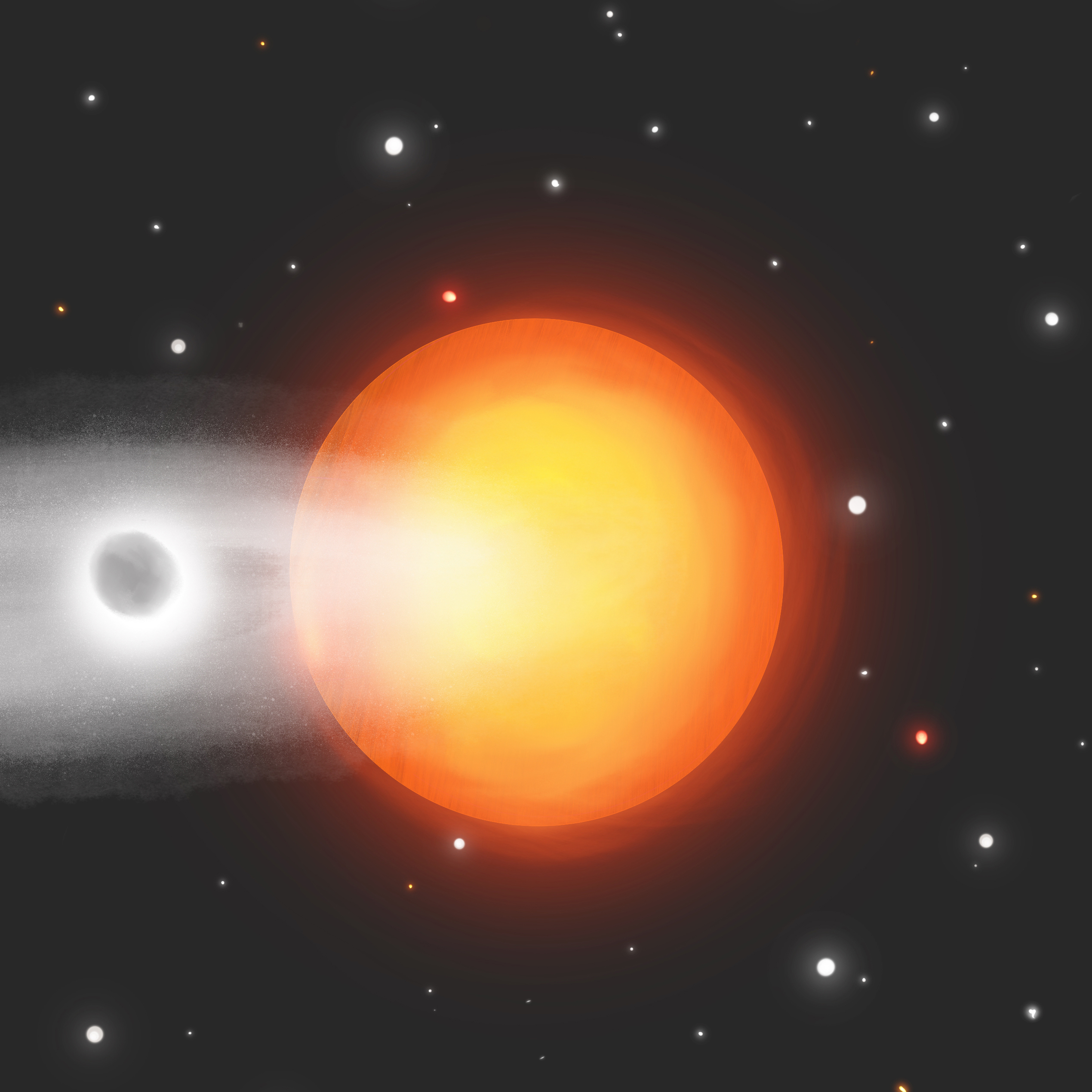
In the vast expanse of space, a distant giant planet, WASP-107b, has been observed shedding its atmosphere in real-time, a phenomenon captured by the James Webb Space Telescope. This gas giant, classified as a ‘super-puff’ due to its unusually large radius relative to its low mass, is located about 200 light-years away. A team of researchers from McGill University, the University of Chicago, the Université de Genève, and the Université de Montréal have been studying this planet, and their findings offer new insights into how planetary atmospheres evolve.
The Webb telescope’s powerful Near Infrared Imager and Slitless Spectrograph (NIRISS) instrument detected a sprawling helium cloud, known as an exosphere, stretching nearly 10 times the radius of the planet. This exosphere passes in front of the star 1. 5 hours before the planet’s passage, or ‘transit,’ begins. The researchers have also reaffirmed the presence of water on the planet, with stronger confidence than previous Hubble Space Telescope measurements.
According to the University of Chicago News, the study, published in Nature Astronomy, provides researchers with a unique opportunity to understand how planets evolve and change over time.
A group of scientists using the James Webb Space Telescope have observed a giant cloud of helium gas evaporating from a distant giant planet.
Related perspectives: See here
 Approved by the Army of the Alien Monkeys