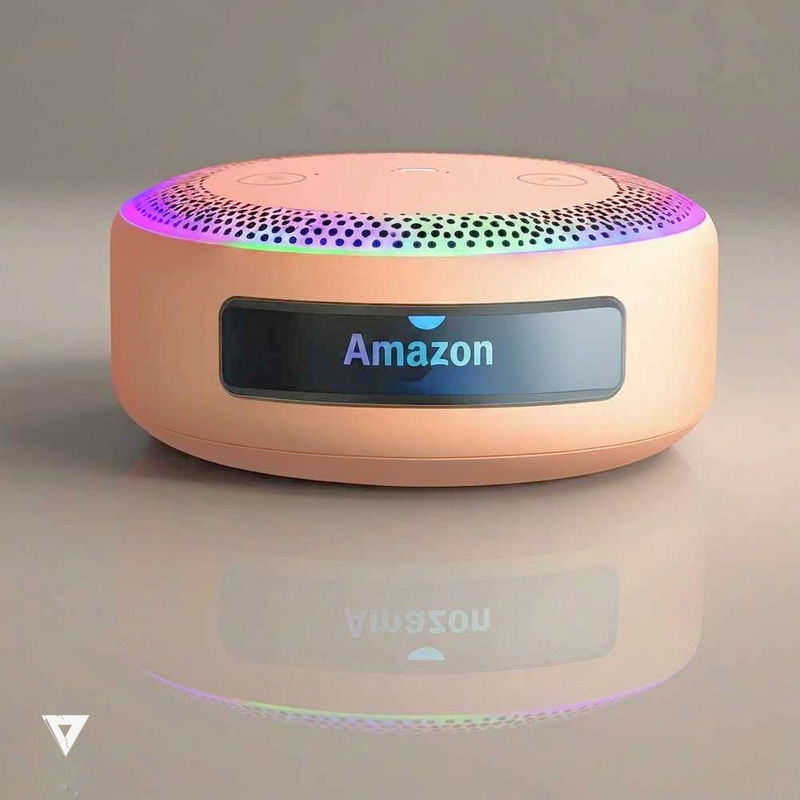
Walk into almost any home today and you will find a small plastic cylinder listening to your private conversations. In this high-stakes race for your living room, Amazon, Google, and Apple are fighting a silent war using voice assistants. For example, my cousin uses his speaker solely to set three-minute egg timers, while tech giants use those same devices to anchor their entire digital empires.
Your phone choice usually dictates your speaker choice.
You are locked in before you even open the box.
To maintain their grip on this locked-in audience, Amazon shook up the budget market in late 2025 by dropping the Echo Dot Max. By stuffing a full Zigbee smart home hub and massive audio drivers into a tiny spherical shell, they made their older, pricier Echo Studio look ancient. During my hands-on testing, this tiny ball blasted bass heavy enough to rattle my coffee mug without turning the music into a muddy mess, proving that you no longer need a giant speaker to fill a room with sound.
While Amazon leaps ahead, Google's rumored Gemini-powered smart speaker is still missing in action. Because of this delay, the old Nest Audio from 2020 remains the default choice for Android fans, even though buying five-year-old audio hardware in 2026 feels like buying a flip phone.
However, reports from The Verge suggest Google is revamping its entire smart home lineup to run on local AI chips, meaning consumers who buy now risk getting stuck with outdated technology.
The Cost of Ultimate Convenience
This rapid hardware race forces consumers into a tough compromise. Choosing a smart speaker makes you choose between convenience, compatibility, and privacy. Amazon devices connect to almost everything instantly, but they also subject you to constant voice ads and aggressive upselling.
On the flip side, Apple keeps your data incredibly secure on the HomePod, but its Siri assistant remains notoriously dim-witted when you ask basic questions.
Ultimately, you must decide whether you want an assistant that actually understands you, or a private speaker that respects your boundaries.
Twelve Years of Listening
To understand how we reached this point of accepting such compromises, we have to look back to 2014. When the original Amazon Echo first arrived as a weird, tall black cylinder, most people laughed at it. Nobody thought we would willingly place live microphones in our kitchens and bedrooms. Yet, over a decade later, Amazon has sold hundreds of millions of these devices globally, transforming a silly cylindrical speaker into a tool that changed how humans interact with machines forever.
Hidden Audio Tricks Your Speaker Can Do
While having active microphones in our homes raises privacy concerns, it also unlocks practical features beyond basic voice commands. For instance, the Echo Dot Max can leverage its built-in microphones to listen for the sound of breaking glass or smoke alarms while you are away at work, sending an alert straight to your phone.
Additionally, you can pair two identical budget speakers to create a true stereo soundstage that easily beats most expensive single-unit speakers—offering a cheap way to get high-end theater sound without spending a fortune.
The Great AI Subscription War in Our Living Rooms
However, the era of cheap hardware and free features may be coming to an end. Inside the tech industry, a massive firestorm is raging over how these companies plan to charge us for the voice assistants already sitting in our homes. Reports from CNBC reveal that Amazon plans to charge a monthly subscription fee for a smarter, AI-powered version of Alexa.
This has sparked a massive online backlash from users who argue they have already paid for their Echo hardware.
For years, tech giants sold these devices at a loss to secure a foothold in our households, and now they are attempting to rent that access back to us.
This transition to paid models is further complicated by hardware limitations. At the Google I/O event, developers voiced deep concerns about legacy speakers lacking the processing power to run advanced local AI models, effectively threatening to turn millions of working devices into electronic waste.
It raises a critical question for consumers: would you pay a monthly fee to unlock the true potential of the hardware you already own, or would you let your device gather dust out of pure spite?
Ultimately, this battle is about who truly owns the technology inside our houses.
Have thoughts on this article?
Send your feedback. Spotted a factual error or typo? Use this form to let us know. We use your feedback to improve our reporting. Thank you!
 Quantum Randomness Revolution: Renner's Team At ETH Zurich Redefines Cybersecurity
 FTC's Lina Khan Cracks Down On Dealership Pricing Scams With Warning Blitz