Global Supergrids Reshape Power: China's Changji-Guquan Line, Xlinks Project, And The Copper-Rare ...
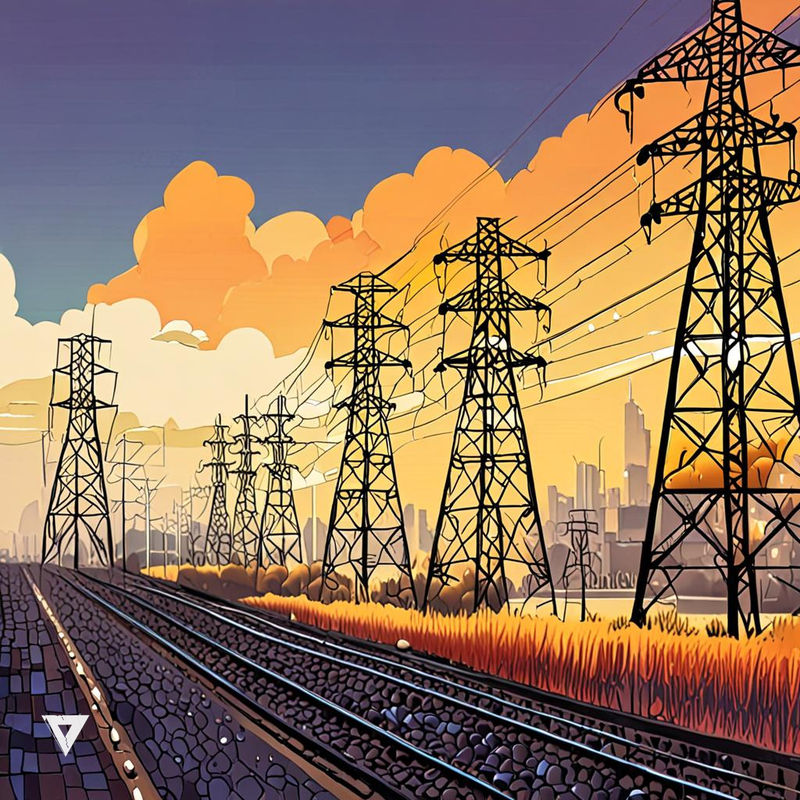
High-voltage direct current lines are quietly changing how electricity moves across the globe. Traditional alternating current lines lose massive amounts of power over long distances. Direct current lines solve this problem.
In early 2026, state utilities in China fully operationalized the world's longest direct-current link, the Changji-to-Guquan line. This massive link carries 12,000 megawatts of power across 3,300 kilometers.
That is enough electricity to power several major cities at once.
In Europe, planners are building undersea cables to capture renewable energy from other continents. The Reuters news agency reported that the Xlinks Morocco-UK Power Project secured new fast-track support to lay undersea cables from North Africa to Great Britain.
This project will supply eight percent of Britain's power directly from solar installations in the Moroccan desert.
Physical transmission lines are now replacing oil tankers as the ultimate tools of global influence.
Power is moving away from traditional oil-producing nations toward sunny desert states.
Across the globe, water remains the primary way to store energy for the grid. Batteries get a lot of public attention. Water is the real giant of the storage world, accounting for most of the global storage capacity. Australia is currently expanding its Snowy Mountains Scheme with a project called Snowy 2.0. This system pumps water uphill when solar energy is cheap and plentiful.
During peak demand times, the water flows down through turbines to make instant power.
This is a simple, century-old technology working at a massive scale.
Building these massive power grids requires an incredible amount of copper. The International Energy Agency reports that global copper demand must double by 2040 to meet green energy goals. In response to this demand, BHP Billiton increased its output targets at the Escondida mine in Chile. Copper is the physical backbone of the new energy economy. Without a massive increase in mining, the transition to global supergrids cannot happen.
The Hidden Vulnerability of Overhead Power Lines
In the United States, security experts are focusing on the physical vulnerabilities of the electrical grid. A single attack on a few key power stations can disable a whole regional grid for months. Large power transformers are custom-built and take up to two years to make. The U.S.
Department of Energy warned that the supply chain for these critical devices is dangerously thin. A coordinated attack on just nine critical substations could cause a nationwide blackout.
The Surprising Geopolitical Grip of Rare Metals
Making high-voltage direct current equipment requires specialized magnets and advanced chips. China controls the vast majority of the supply chain for these components. According to Bloomberg, trade restrictions on key raw materials disrupted the production of solar and grid hardware worldwide. In our effort to move away from oil cartels, we have built a system that relies on a single country for its core technology.
The Sovereign Wealth Bet on Desert Power
Sovereign wealth funds in the Middle East are investing heavily in solar export grids. The Saudi Public Investment Fund recently backed the Sudair Solar project with billions of dollars. This facility will power over one hundred thousand homes. Saudi Arabia plans to connect its solar plants directly to Europe through new undersea cables. This strategy ensures that the region remains a major energy exporter even as fossil fuel use declines.
Let Us Debate the Future of Global Power Lines
And now we want to hear your thoughts on these massive energy networks. Is it really smart to rely on a physical wire stretched across thousands of miles of ocean instead of building local nuclear reactors? We are asking because the sheer size of these projects creates wild security risks.
Let us connect the dots. If these undersea cables carry the lifeblood of our economies, they become prime targets for hostile navies.
During the Nord Stream pipeline incidents, the world saw how easy it is to damage deep-water infrastructure.
Now imagine a subsea power cable getting cut during a diplomatic dispute.
It is a terrifying scenario.
And yet, we act as if undersea cables are completely safe. A study by the Royal United Services Institute shows that undersea infrastructure has almost no physical protection. But let us look at the funny side of this green transition.
We are trying to protect the environment by digging up the ocean floor for copper.
The International Seabed Authority is facing intense pressure to allow deep-sea mining.
We are literally destroying the deep-sea ecosystem to build solar grids that protect the air. It is like burning your house down to keep your lawn green.
Tell us if you think this global grid plan is a genius idea or a total disaster.
Have thoughts on this article?
Send your feedback. Spotted a factual error or typo? Use this form to let us know. We use your feedback to improve our reporting. Thank you!