Humpback Whale's Record-Breaking Journey: A Leap Beyond Borders & Species Limits
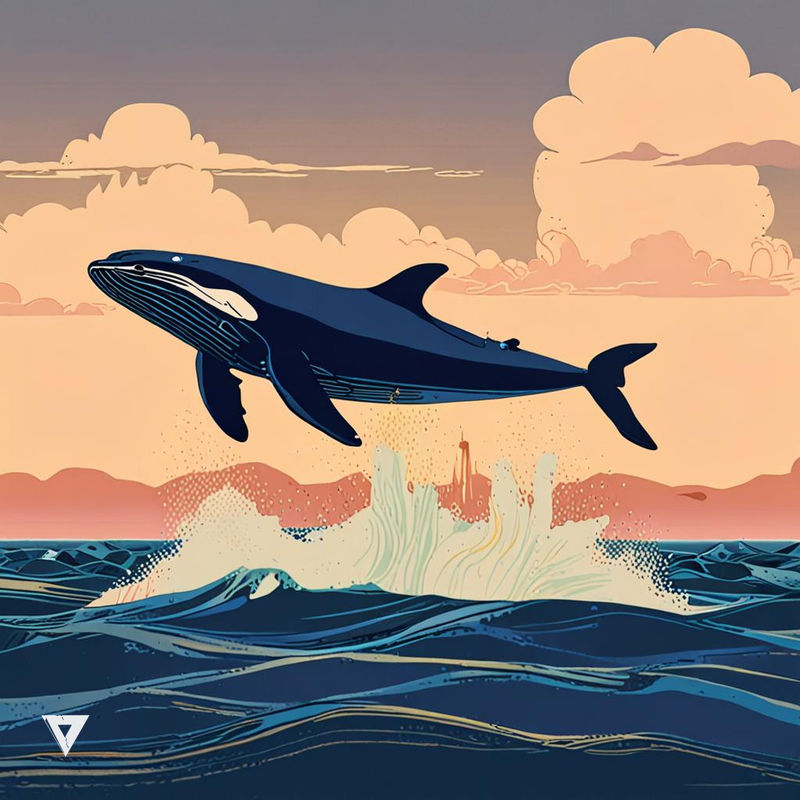
One humpback whale just rewrote the record books by swimming 14,200 kilometers across the open sea. This giant traveler moved from the warm waters of Hervey Bay in Australia all the way to the coast of Brazil. For the first time, we have proof of a whale crossing two different oceans to find a new home. This distance is the same as flying from Sydney to London without stopping.
It is the longest trip ever seen for this species.
Scientists found this whale by looking at its tail. Each humpback whale has a unique pattern on its tail, called a fluke, which works like a human fingerprint. In 2007, a researcher took a photo of this specific whale in Queensland. Then, in 2019, someone else took a photo of the same tail near São Paulo. By matching these images, teams from Griffith University showed that these animals are much more mobile than we ever thought.
They are not stuck in one part of the world.
Across the vast blue, another whale showed us even more secrets. This second whale was first seen in 2003 at the Abrolhos Bank, a famous whale nursery in Brazil. It was hanging out in a loud, active group of nine adults. But we often assume whales stay with their own "tribe" or group. This data proves that individuals can and do leave their families to explore the entire planet. They are true globetrotters.
And we must face the facts about our own limits. We only know where the trip started and where it ended. Because we do not have a satellite tag on every whale, the real path was likely much longer than 14,200 kilometers. The whale might have zig-zagged or stopped to eat in the Southern Ocean. We are only seeing the tiny tips of their massive lives. Most of their journey stays hidden in the deep dark water.
But why do we spend so little on these studies? This discovery only happened because people kept taking photos for over twenty years. It took decades of boring, slow work to get this one "wow" moment. We need to fund these long-term projects more. If we want to save the ocean, we have to know where the animals actually go. Guessing is not good enough anymore. Data wins every time.
The Ripple Effect on Global Law
When a whale swims from Australia to Brazil, it crosses through the waters of many different countries. This means one nation cannot protect a whale by itself. Governments must work together to make sure shipping lanes do not hit these long-distance travelers.
This discovery forces leaders to change how they draw maps for ocean safety.
If a whale is a global citizen, we need global laws to keep it safe. Local protection is a nice start, but it fails when the animal leaves the neighborhood.
The Stories Told by Tail Scars
If you look closely at a whale fluke, you see a map of a hard life. Tiny white scars come from barnacles or scratches from ice and rocks. These marks stay on the skin for years, allowing humans to track a single life across half a century.
These photos are more than just pictures; they are a history book of every scrape and fight the whale ever had. Scientists use software to scan thousands of these "books" to find a match.
It is like a global game of "Where’s Waldo?" played with fifty-ton giants.
The Mystery of the Wrong Turn
Some experts argue that these record-breaking swims are actually mistakes. There is a secret debate about whether a "glitch" in the Earth's magnetic field confuses a whale's internal compass. If the poles shift or solar flares happen, a whale might head east instead of south.
Others think these whales are explorers looking for new food as the water gets warmer.
Is it a broken compass or a brave heart?
We do not know yet, but the argument is heating up in science labs. Some call these whales "scouts" for a changing world.
Tracking Giants Through Three Decades of Polar Seas
The International Whaling Commission keeps track of whale groups to make sure they are healthy. For years, they thought the Australian whales and the Brazilian whales never met. They are separated by the cold currents of the Antarctic and the massive width of the Pacific.
This new data proves the two groups are mixing their genes.
This "genetic bridge" helps the species stay strong.
It means the whales are doing their own work to stay healthy, even without our help. They are much smarter at survival than we give them credit for.
Questions for the Next Great Ocean Adventure
How do whales decide which direction to turn when they leave the ice? Can they hear the songs of other whales from thousands of miles away? Is it possible there is a "whale highway" we haven't mapped yet? To find the answers, check out these resources:
- Read about the Happywhale project to see how your own photos can track a whale.
- Look up the National Geographic guide to humpback patterns to learn about fluke markings.
- Check the Woods Hole Oceanographic Institution for news on whale song travel.
- Study the NOAA migration maps to see the "normal" routes that these whales just broke.
Have thoughts on this article?
Send your feedback. Spotted a factual error or typo? Use this form to let us know. We use your feedback to improve our reporting. Thank you!
 University Of Michigan Researchers Fix Helium Damage Math For Nuclear Reactors With Tool 'F-SCATTER'
 The Great Mathematical Rebirth