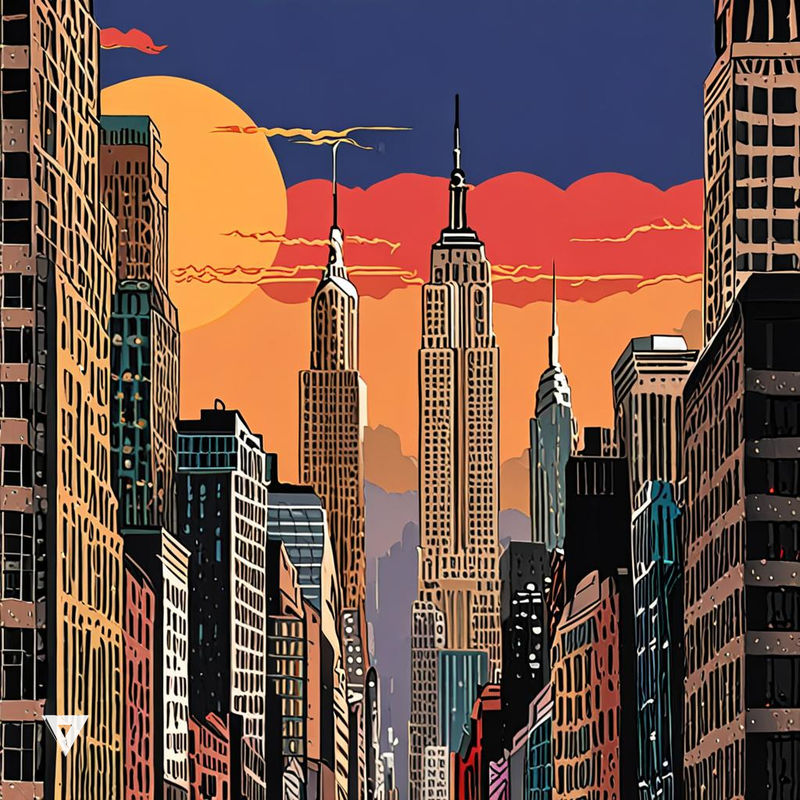
New York City just wrapped up its first full Manhattanhenge of the year on May 29, 2026. Photographers completely blocked 34th Street near the Empire State Building to catch the sun melting into the horizon. This spectacular event occurs because the city's grid is rotated 29 degrees east of true geographic north, allowing the sun to align perfectly with the streets twice in late May and twice in mid-July.
When Cosmic Math Collides with Asphalt
For those looking to witness this alignment firsthand, timing is everything. On July 11, 2026, at precisely 8:20 PM EDT, the entire sun will sit right on the centerline of the streets. If you miss that date, the half-sun version happens the next day on July 12. But you cannot just stand anywhere to see it. To get the best view, you must head to wide cross streets like 14th, 23rd, 34th, 42nd, or 57th Streets.
For an extra dramatic shot, go as far east as possible so the buildings frame the sun like a massive, glowing picture frame.
Look toward New Jersey and watch the light explode.
The Unintentional Genius of the 1811 Grid
This modern spectacle is actually the accidental byproduct of historical planning. Under the old surveyor plans of the Commissioners' Plan of 1811, city leaders laid out the Manhattan street grid to maximize real estate efficiency and facilitate cheap, easy housing construction.
John Randel Jr., the chief surveyor who mapped out the island, spent years dragging measuring chains through swamps and rocky hills.
His strict, boxy design unintentionally created a modern temple of light, ensuring that millions of people stop traffic two centuries later just to stare at the sky.
The Secret Overpass for the Ultimate Picture
While the grid offers many viewing angles at street level, one vantage point stands out above the rest. Walk up to the Tudor City Overpass on 42nd Street to get away from the street-level crowds. This bridge offers an elevated view of the entire canyon of buildings, with the Chrysler Building towering right next to you. But show up early because hundreds of professional photographers claim their spots hours before sunset.
It is loud, crowded, and absolutely chaotic.
You get the perfect angle without risking a ticket for walking into the middle of active traffic.
Are We Built on the Wrong Geometrical Angle?
Yet, this stunning visual alignment also highlights a deeper debate about the utility of the grid itself. Let us start a fight about urban planning. Some critics argue that the grid system is actually terrible for human well-being because it blocks natural wind and creates hot wind tunnels.
For example, researchers studying urban environments at Columbia University show how these concrete canyons trap heat, a problem known as the urban heat island effect.
But others argue the grid is a masterpiece of navigation that keeps the city alive.
This brings up a massive debate: Should we design future cities to align with astronomical events on purpose?
Ancient builders did this with Stonehenge and the Pyramids of Giza. We have the technology to align our homes with the stars, but we choose to align them with property lines instead.
It is time to demand more cosmic geometry in our daily lives.
To study this topic further, look up these key resources:
- "The Measure of Manhattan" by Marguerite Holloway, which details the life of John Randel Jr. and the brutal physical surveying of the island.
- The American Museum of Natural History official Manhattanhenge portal, featuring historical calculations of the sun's path.
- NASA's Earth Observatory studies on how street orientation affects the surface temperature of global megacities.
Have thoughts on this article?
Send your feedback. Spotted a factual error or typo? Use this form to let us know. We use your feedback to improve our reporting. Thank you!
 Virtual Tides At Sherwood Island: How VR Climate Simulations Shock Connecticut Beachgoers Into ...
 Supercomputer Backs Arsenal For Fast Start In 2026