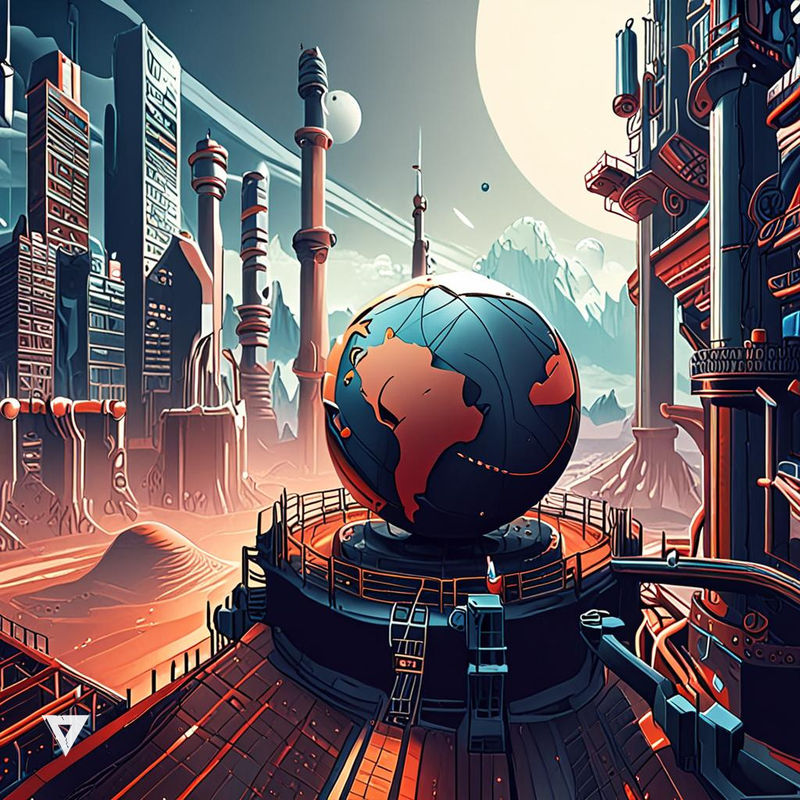
“The factory of the future is not on the ground; it is floating in the stars, and the profit margins are out of this world.”
Gravity Is A Thief Of Manufacturing Perfection
Look at your phone. Look at your computer.
The chips inside them are good, but they are not perfect.
On Earth, gravity is a thief that steals quality from our materials.
When we melt metal or grow crystals on the ground, gravity pulls the heavy parts down and lets the light parts float up. This creates tiny flaws that slow down our tech. But in the silence of orbit, gravity is gone. Crystals grow in a perfect, even way because nothing is pulling on them. This environment acts as the ultimate low-pressure clean room—a place where we can make things that are physically impossible to build on our home planet.
Peeling back the layers
However, we have a major problem to solve before these space-made goods become commonplace: launching heavy stuff into the sky costs a fortune.
To fix this, we need materials that are light but incredibly tough.
We are now seeing the rise of self-healing materials that can fix their own cracks, alongside the use of the natural cold of orbit to cool our machines for free. Because we do not need huge cooling fans or heavy shields, we can make the manufacturing hubs much smaller.
By cutting the weight, we cut the cost, allowing the business case for orbital production to finally reach its potential.
The Cardiff Pioneers And The Orbital Origin Story
Overcoming these logistical hurdles is exactly what the industry’s frontrunners are focused on today.
In Wales, a company called Space Forge is leading the charge with a study called ‘2Forge2Furious.’ They are not just building satellites; they are building returnable factories.
Under a contract with the UK Space Agency, they are growing semiconductor seed crystals in orbit—the building blocks for the next wave of high-speed electronics.
They even have a patent for a heat shield that opens up like an umbrella to protect the gear when it falls back to Earth, using a soft-capture system that catches the precious cargo like a falling egg in a giant, high-tech pillow.
Why Space Glass Will Change Your Life
While semiconductors are the focus for some, others are looking at how microgravity can revolutionize global communication.
Think about the internet cables that run under the ocean.
They use a glass called ZBLAN, but on Earth, this glass gets tiny crystals in it that block light.
In the microgravity of the International Space Station, these crystals do not form. This means we can make fiber optic cables that are one hundred times better than what we have now. We are no longer just going to space to look at planets; we are going there to manufacture the “perfect” materials required for modern life.
Behind The Scenes Of The Orbital Shop Floor
The benefits extend beyond data cables; the same orbital environment is also proving to be a breakthrough laboratory for life-saving medicine.
Inside recent missions, like the Varda Space Industries W-1 flight, scientists successfully made crystals of Ritonavir, a medicine used for HIV, while circling the Earth.
By changing how the molecules sit together in zero gravity, they can make medicine that the body absorbs faster.
But the hardest part is not making the stuff; it is getting it back down without it burning up. That is why companies are obsessed with “re-entry physics.” If you cannot land your product safely in a field in Utah or a net in the ocean, you don’t have a business—you just have very expensive space junk.
The 1.8 Trillion Dollar Question
The stakes for mastering these landings are high, as the space economy is on track to hit $1.8 trillion by the year 2035. Right now, the action is happening in places like the Orbital Reef, a planned private space station by Blue Origin and Sierra Space.
They are building a “mixed-use” business park in the sky, while Axiom Space is adding segments to the ISS to create the first commercial labs where companies can rent a spot to grow their own crystals.
Additional Reads for the Bold:
- NASA’s In-Space Manufacturing Roadmap (The blueprint for orbital factories).
- The Space Forge Patent GB2614312B (How to catch a spacecraft without breaking it).
- The Varda Space W-Series Mission Reports (Proof that orbital drug making works).
I tell you, it is pure madness to keep trying to fight gravity on Earth when we can just leave it behind.
We are at the start of a new industrial revolution.
Today is Friday, April 17, 2026, and the race to own the orbital factory floor is officially in high gear!
Have thoughts on this article?
Send your feedback. Spotted a factual error or typo? Use this form to let us know. We use your feedback to improve our reporting. Thank you!
 Savoring Speed: Blockchain & AI Unite