NASA’s ESCAPADE Probes Embark On Circuitous Journey To Mars
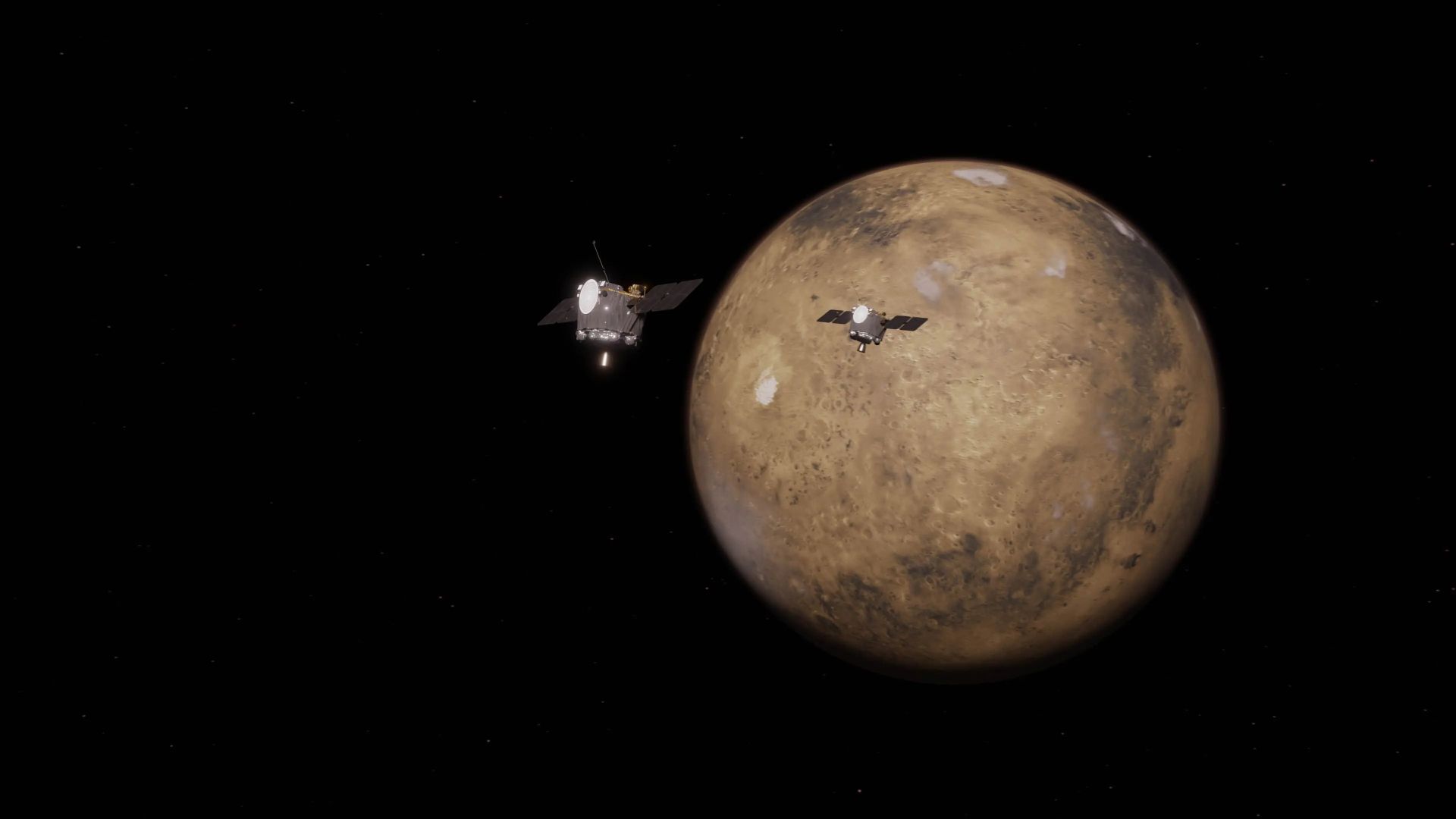
In the vast expanse of space, a peculiar trajectory unfolds, one that will test the mettle of NASA’s ESCAPADE probes. Launched on November 13, 2025, atop Blue Origin’s New Glenn rocket from Cape Canaveral, Florida, the twin spacecraft, aptly named Escape and Plasma Acceleration and Dynamics Explorers, embarked on a circuitous journey to Mars. The probes’ destination, the Red Planet, was not aligned with Earth in a way that would permit a direct trajectory.
Consequently, the spacecraft were inserted into a “loiter” orbit around Earth’s Lagrange point 2 (L2), approximately a million miles away, opposite the sun. This Lagrange point, a gravitational sweet spot, allows the probes to maintain a stable position relative to Earth and the sun. The ESCAPADE mission is tasked with unraveling the intricacies of the solar wind’s interaction with Mars’ magnetic environment and its impact on the planet’s atmospheric escape.
This knowledge will provide critical insights into Mars’ climate history and evolution. According to Rob Lillis, principal investigator of the ESCAPADE mission at the UC Berkeley Space Sciences Laboratory in California, the additional 12 months in space will impose some wear and tear on the spacecraft.
A space saga is underway, a celestial long and winding road that may also have consequences for future settlers firmly planted on the Red Planet.
More takeaways: See here
 Approved by the Army of the Alien Monkeys