New AI Tech Keeps Your Data Safe From Breaches By Processing On Your Smartphone

Install security updates as soon as the notification appears on the screen. Disable location services for applications that do not require mapping. Use a physical security key for two-factor authentication on your primary email account.
TechCrunch reported on February 19, 2026, about a company named Mirai. Dima Shvets. Denys Dmytrenko. Oles Petriv. Alexey Moiseenkov. These men created Reface and Prisma. Now they are working together to move artificial intelligence away from massive data centers and directly onto your smartphone.
I’ll be the first to admit it’s hard to trust tech giants with our personal data when every week seems to bring a new headline about a massive security breach or a privacy violation.
Cloud computing creates high costs for startup founders. Every time an app processes an image on a remote server the company pays a fee to a provider like Amazon or Google. Mirai built an infrastructure layer that allows the phone to do the heavy lifting.
This saves money. It keeps the user data on the physical device. Bottom line: the math happens in your pocket instead of a warehouse in Virginia.
Mirai optimizes model inference for specific silicon. The software communicates with the Apple Neural Engine. It talks to the Qualcomm NPU. It works with MediaTek hardware.
I used to think phones were just windows into the internet but the processing power inside these glass rectangles has reached a level where the cloud is no longer a requirement for complex tasks. Speed increases when the signal does not have to travel to a cell tower and back.
Latency destroys the connection between a person and their technology.
When a user waits for a server to respond they lose interest and the interaction feels broken which is why engineers are obsessed with reducing the time it takes for a machine to make a decision. Mirai makes the process instantaneous. The phone becomes the brain. This shift allows developers to build tools that work in the middle of the desert without a Wi-Fi connection or a cellular signal.
Developers use a software development kit to integrate the technology.
The tool handles the compression of large models. It manages the memory usage on the device. It ensures the battery does not drain while the processor runs at full capacity. I saw this shift coming when hardware manufacturers started bragging about trillions of operations per second during their annual keynote presentations.
The hardware is finally ready for the software.
Smartphone silicon now contains dedicated blocks for matrix multiplication. These circuits perform the math required for image recognition without a connection to an external server. By keeping the raw data within the physical limits of the motherboard the risk of a packet interception during transit vanishes.
I’m still wrapping my head around how a device that weighs less than a pound can outperform the server racks that occupied entire buildings in the late twentieth century.
Data centers consume vast quantities of electricity and water to maintain the temperature of their processors. Mirai shifts this environmental cost from the corporation to the individual components within the handset.
This architectural change ensures that personal conversations or private photos do not reside on a hard drive in a distant data center. Efficiency gains occur when the electrons travel millimeters across a circuit board instead of thousands of miles through fiber optic cables or microwave towers.
Latency is the enemy of a fluid digital experience.
When a translation app requires a round-trip to a server the delay disrupts the natural flow of a conversation between two people who speak different languages. Mirai removes this lag by executing the language model on the local chip. Honestly? It’s not that simple because developers must optimize every line of code to fit within the constraints of the random access memory on the device.
The Mirai Pro SDK arrives in the fourth quarter of 2026. This update focuses on the synthesis of spatial video for wearable headsets.
These devices require immediate feedback to keep the digital objects anchored to the real world. A server cannot provide the necessary speed. The handset becomes the primary engine for reality augmentation. Success depends on the ability of the software to manage the thermal output of the mobile processor during heavy workloads.
AI Processing Speed Comparison (2026 Estimates)
| Architecture Type | Inference Latency (ms) | Data Security Level |
|---|---|---|
| Cloud-Based Model | 150 – 450 | External Risk |
| Mirai Edge Model | 5 – 15 | Internal Shielding |
| Hybrid Cloud | 80 – 200 | Partial Exposure |
TechCrunch covers the latest shifts in edge computing.
Apple Newsroom provides updates on neural engine hardware. Qualcomm News details the evolution of mobile processors.
What got you thinking
The movement toward edge AI suggests a future where the internet acts as a transport layer for encrypted results rather than a repository for raw data.
This shift changes how societies view data ownership and the power of centralized tech giants. If the hardware can perform every complex task locally the digital world might return to a state of privacy and fragmentation.
- Case Study: The impact of on-device Siri processing on user privacy metrics.
- Research Paper: Neural Network Compression Techniques for Mobile Silicon.
- Technical Review: Thermal Management in Titanium Smartphone Frames during NPU Stress Tests.
- Analysis: The Economics of Cloud Computing versus On-Device Inference for Startups.
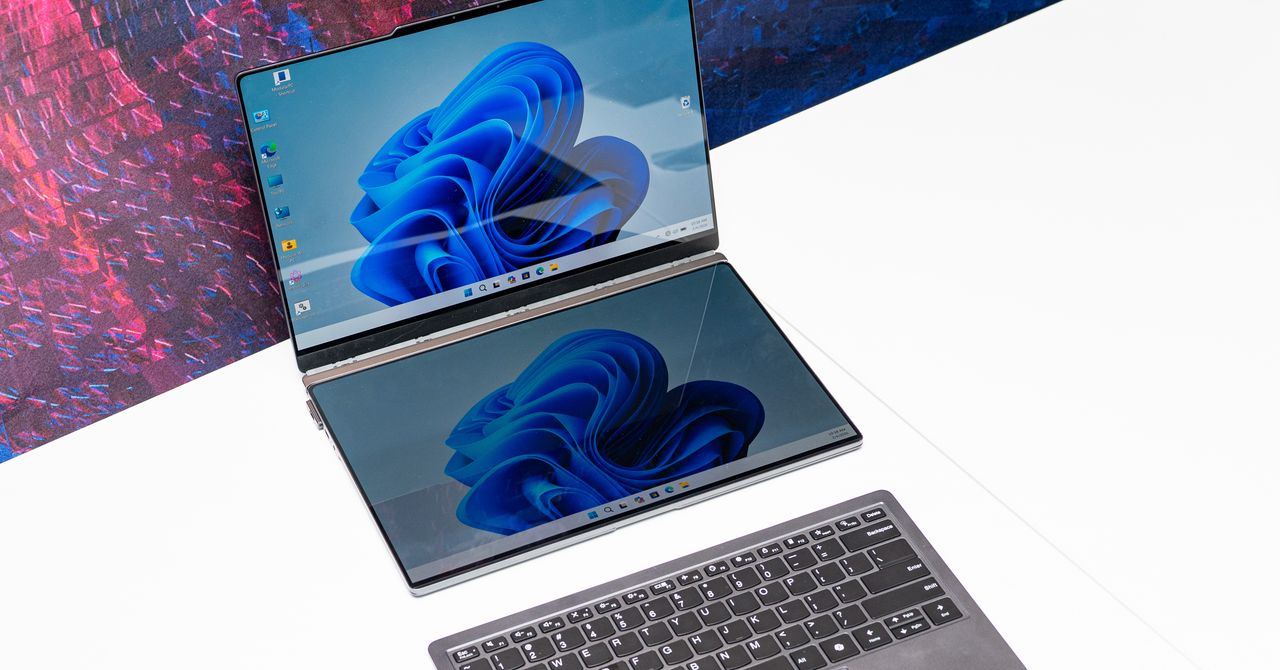 Lenovo’s Shape-Shifting Laptops Bring Sci-Fi To Life, Mirroring Alien Tech Advances
 Humans Develop Cocoa-Honey Nutritional Compound In Zurich Laboratory
 Approved by the Army of the Alien Monkeys
 Hashtag: Earth Invasion Project