Saturn-Sized Rogue Planet Discovered In The Einstein Desert Through Microlensing Event
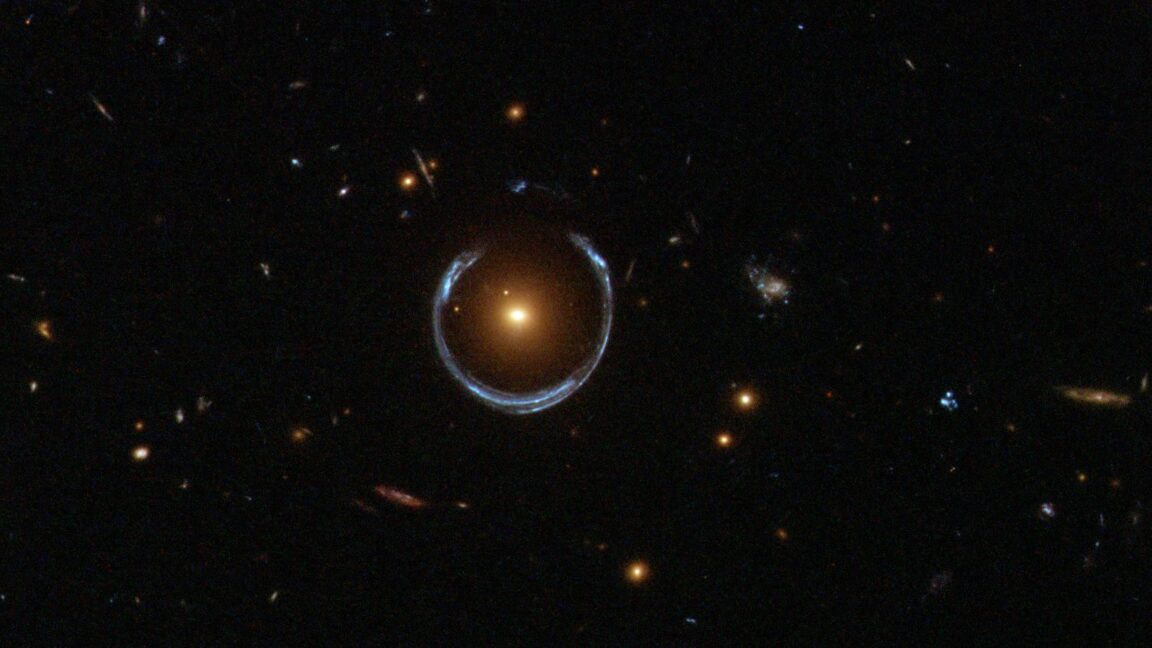
In the vast expanse of the “Einstein Desert,” a region of space where free-floating planets roam, a recent microlensing event has led to the discovery of a Saturn-sized planet. This phenomenon occurs when a celestial ___ passes between Earth and a distant star, creating a gravitational lens that distorts the star’s light, causing it to briefly brighten.
The event, detected by the Korea Microlensing Telescope Network and the Optical Gravitational Lensing Experiment, was tracked in early May 2024. Designated as KMT-2024-BLG-0792 and OGLE-2024-BLG-0516, the microlensing event has shed light on the mysterious world of rogue planets. Most exoplanets discovered to date have been found in tight orbits around their host stars, formed from the disks of gas and dust that surrounded the star in its early history.
However, the Saturn-sized planet detected through microlensing has left scientists pondering its origin. Two possible routes to its formation have been proposed: either it was ejected from its parent star system or it formed in isolation, a true orphan of the cosmos. The detection of this free-floating planet has significant implications for our understanding of planetary formation and the dynamics of the galaxy.
Most of the exoplanets we’ve discovered have been in relatively tight orbits around their host stars, allowing us to track them as they repeatedly …
Other related sources and context: Visit website
 Approved by the Army of the Alien Monkeys