Technology, And Pitfalls Of Using Nuclear Power In Space
error code: 500 ← →
Thoughts:
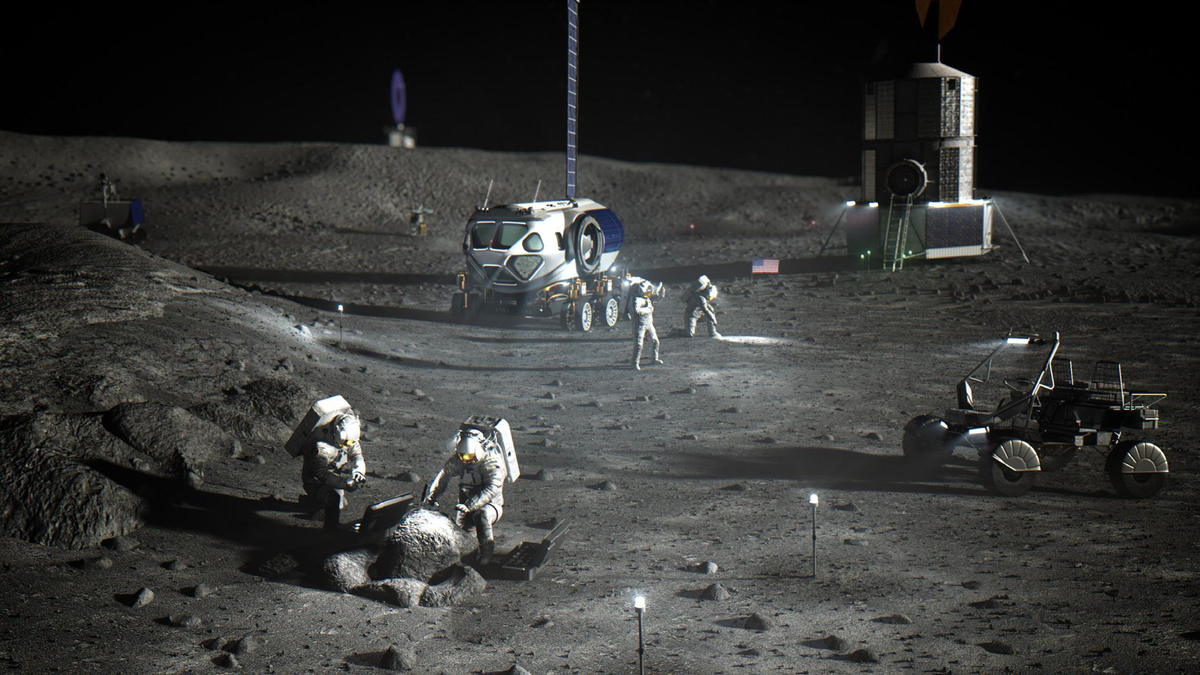
The United States’ Lunar Fission Surface Power Project aims to deploy a small nuclear reactor on the moon by the early 2030s, marking a significant step towards establishing a permanent nuclear power source beyond Earth’s orbit. This development is crucial for sustaining human presence on the moon and Mars, as solar energy is limited by the two-week-long lunar nights and scarce sunlight at the poles.
According to a report by The Hindu, “For a sustained moon and Mars presence, humans’ energy independence thus becomes a critical enabler” (The Hindu, 2023). Nuclear power has been a reliable option for space exploration, with radioisotope thermoelectric generators (RTGs) powering the Voyager spacecrafts’ journey through the solar system.
RTGs convert heat from the decay of plutonium-238 nuclei into electricity, providing a compact and dense source of power. However, they have limitations, producing only a few hundred watts of electric power, sufficient for instruments but not for human habitats or industrial operations. As noted by the US Department of Energy, “RTGs only produce a few hundred watts of electric power, enough for instruments but insufficient for human habitats or industrial operations” (US Department of Energy, 2022).
The US recently announced plans under its Lunar Fission Surface Power Project to deploy a small nuclear reactor on the moon by the early 2030s.
Looking to read more like this: See here
 Approved by the Army of the Alien Monkeys