The First Proposed Space Billboard: A Visionary’s Quest For Advertising In Orbit
In 1993, Mike Lawson, an aerospace entrepreneur from Roswell, Georgia, introduced a vision for the future of advertising: space billboards. His plan was meticulous, with a proposed launch in 1996. Lawson’s team would shoot a package of tightly-wound mylar into orbit, approximately 180 miles above the Earth. Once in orbit, the material would unfurl into a thin, reflective sheet, up to a mile long and a quarter mile tall, bordered by inflatable mylar tubes that would create a rigid frame.
The sheet would reflect the sun’s rays, amplified by small mirrors, creating a roughly moon-sized image in the sky. This image would be a single design, likely a company logo, as the resolution would be too low to read ad copy without a telescope. As the billboard orbited the Earth, it would be visible from every corner of the globe, albeit for only about 10 minutes a day per location.
Lawson’s proposal assembled attention from the Associated Press, which consulted with NASA. The agency found no technical flaws, deeming the concept “very feasible.” Lawson envisioned flying recognizable logos, such as McDonald’s Golden Arches, in space. The idea of advertising in space was not new, even in 1993.
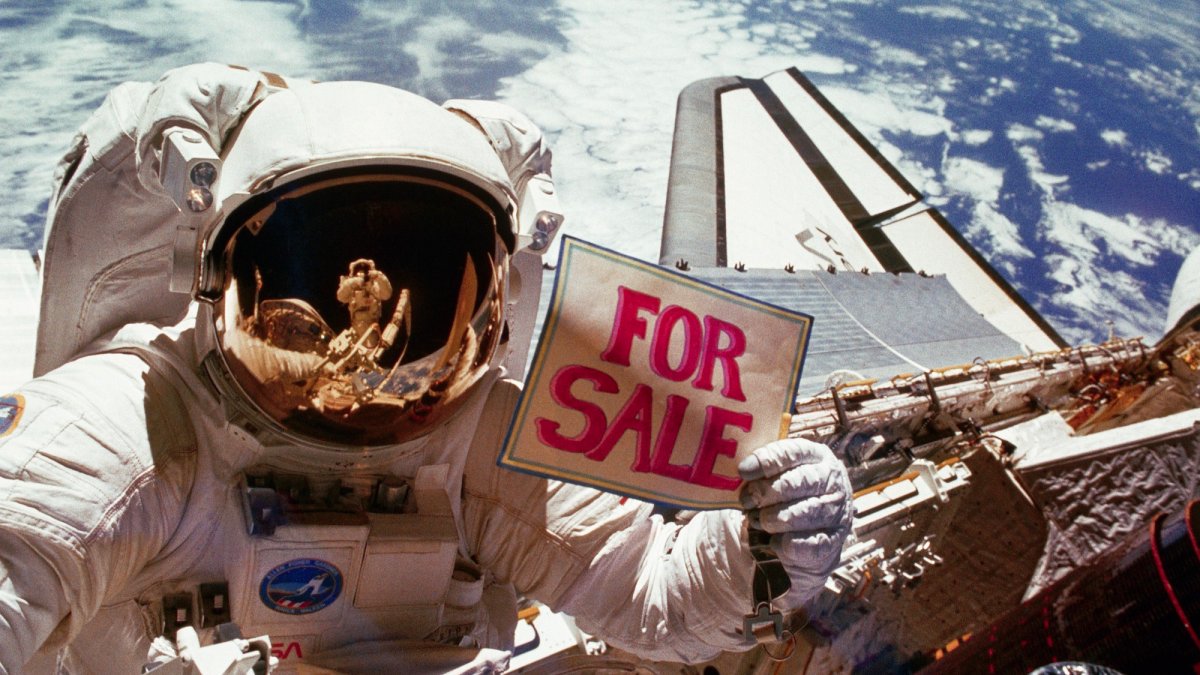
In 1993, Mike Lawson, an aerospace entrepreneur based in Roswell, Georgia, unveiled his vision for a brave new future of advertising: space …
Other related sources and context: See here
 Approved by the Army of the Alien Monkeys