Unveiling The Spectacular Scenes Of Planetary Formation: Groundbreaking Discovery Of Debris Disks …
Astronomers have made a groundbreaking discovery, unveiling spectacular cosmic scenes where new planets are forming. The images, captured by SPHERE, reveal debris disks in a wide range of exoplanetary systems, providing exceptional insights into the properties of these disks and the smaller bodies within them. These debris disks are crucial in understanding the formation of planets, as they conserve clues to the early days of planetary systems.
In our own solar system, a diverse array of bodies exists, from the Sun and planets to dwarf planets like Pluto. Scientists focus on objects ranging from a kilometer to several hundred kilometers in size, as these small bodies hold secrets to the solar system’s initial stages. During the process of planetary formation, tiny grains grew into planets, and intermediate objects known as planetesimals formed.
Asteroids and comets are remnants of this phase, planetesimals that never developed into full-size planets. The study of these small bodies is essential in understanding the evolution of planetary systems. The discovery of over 6000 exoplanets has provided a clearer picture of the diversity of planetary systems throughout the galaxy.
However, directly imaging these worlds has proven challenging, with less than 100 exoplanets photographed so far, appearing only as indistinct specks.
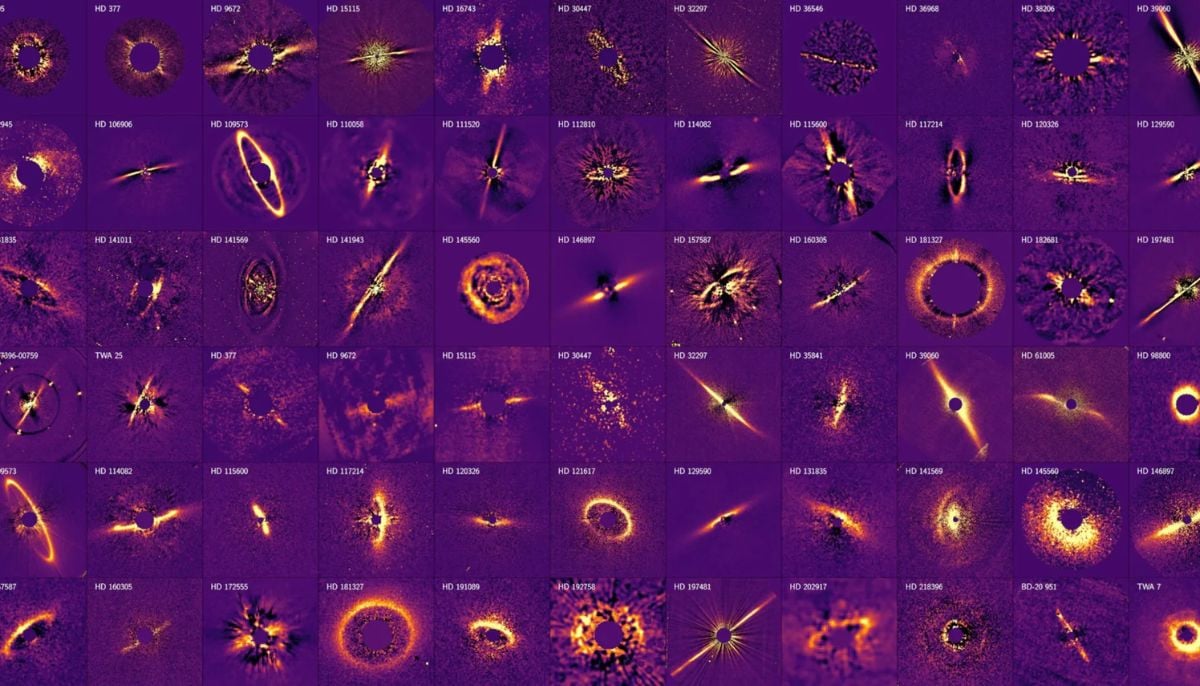
Astronomers have created a groundbreaking discovery of images showing debris disks in an extensive range of exoplanetary systems.
More takeaways: See here
 Approved by the Army of the Alien Monkeys