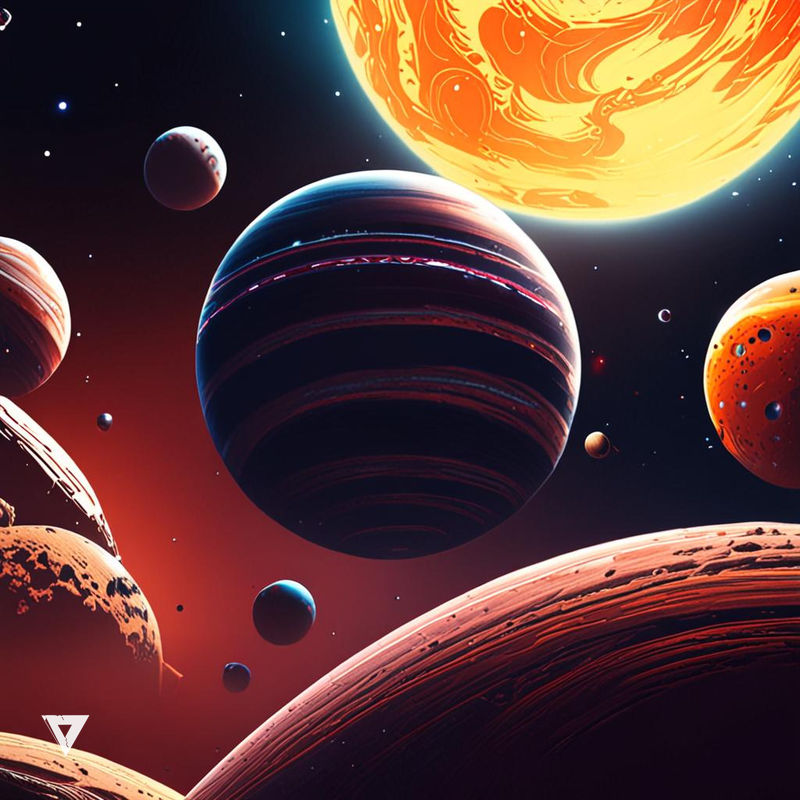
The “Forbidden” Planet That Shouldn’t Exist
Astronomers just found a planet that shouldn’t be there. It’s called TOI-5205 b, and it’s a Jupiter-sized gas giant orbiting a tiny red dwarf star. Usually, these small stars don’t have enough “building blocks” in their orbit to create a planet this big, but this one managed to defy the rules.
What makes it even weirder is its chemistry. Data from the James Webb Space Telescope shows the planet is “metal-poor,” meaning it has fewer heavy elements than the star it orbits. This suggests the planet didn’t grow slowly over millions of years; instead, it likely vacuumed up massive amounts of gas in a sudden, frantic growth spurt before the surrounding dust could settle.
Because the star is so small and the planet is so huge, it blocks 6% of the starlight when it passes by—that’s a massive signal for telescopes. This gives us a perfect “laboratory” to study gases like methane and hydrogen sulfide in deep alien clouds. We’re also seeing other strange neighbors, like TOI-3757 b, which is so low-density it’s basically a giant “marshmallow” in space.
The GEMS program is now hunting for more of these “forbidden” giants. We’re starting to realize that our own Solar System’s slow-and-steady formation might actually be the weird one. It turns out that even the smallest, most chaotic stars in the galaxy can produce massive, rule-breaking worlds if the conditions are right.
Have thoughts on this article?
Send your feedback. Spotted a factual error or typo? Use this form to let us know. We use your feedback to improve our reporting. Thank you!
 Protecting Your Assets From Digital Fraudsters: A Tactical Guide to Modern Scams