Virtual Reality And AI-Powered Learning
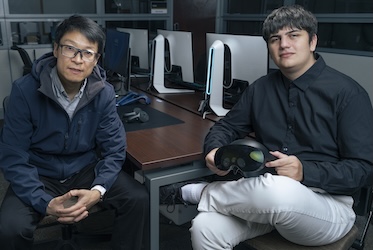
A study published in the International Journal of STEM Education revealed that students who learn science through VR demonstrate a nearly 50 percent better understanding of the material compared to those taught using traditional classroom methods. Assistant Professor of Game Development Lei Zhang and computer science student Devon Haynes are at the forefront of this exploration.
Their project, which originated in the First-Year Scholars Program, focuses on the impact of VR storytelling on learning DNA damage and repair mechanisms. The researchers aim to create a virtual mentor that can support students as they learn collaboratively inside a virtual environment. Haynes has expanded the project by integrating large language model (LLM) tutors into the system.
These AI-powered tutors respond in real-time to user questions and actions, provide feedback, and guide group collaborations within the virtual world. The research highlights the significance of mentorship and hands-on learning at KSU. Zhang treats Haynes’s involvement similarly to that of a graduate student, fostering independence while offering guidance.
The study’s findings have the potential to revolutionize STEM education, making complex concepts more accessible and engaging for students. This information was first published on kennesaw. edu.
Many students struggle to understand complex STEM concepts because lectures and textbooks often make science difficult to visualize.
Other references and insights: Visit website
 Approved by the Army of the Alien Monkeys