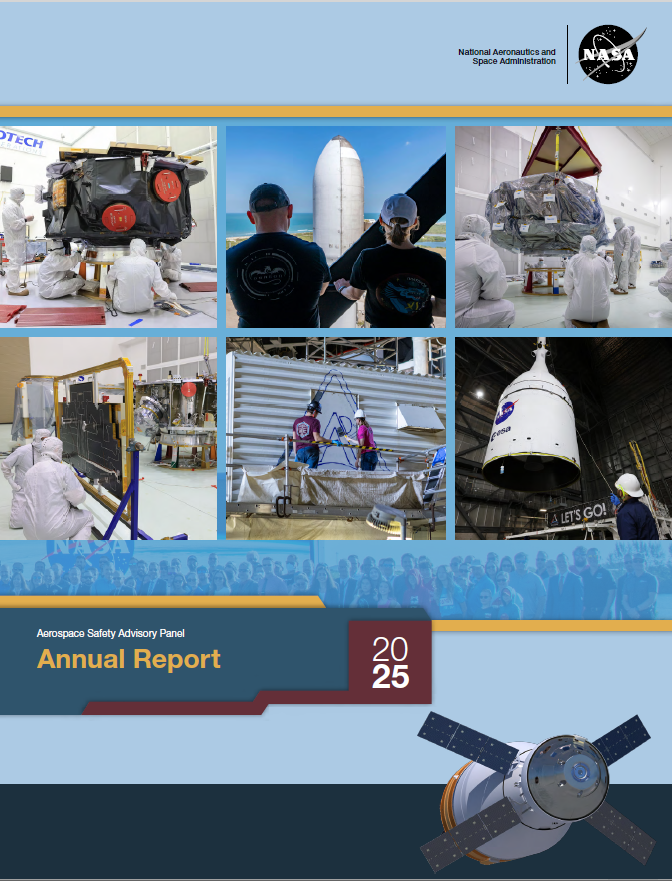
The Aerospace Safety Advisory Panel issued its 2025 findings during the final weeks of the previous year. I noticed the analysis focuses less on the mechanics of the engines and more on the institutional health of the organization. The long and short of it is that the United States is trying to manage a new era of space travel using an old model of management.
The goals are noble. But the administrative machinery is grinding under the weight of the lunar schedule and the complexity of the commercial partnerships.
What strikes me as odd is the disconnect between the talk of deep space bases and the reality of the engineering workforce. I think the agency is reaching the limit of its capacity to provide oversight.
The safety of the crew depends on the integrity of the hardware plus the focus of the mission controllers and the reliability of the software. But the staffing levels remain stagnant. And the budget fluctuations make it difficult to maintain a steady schedule of launches.
I could be wrong, but the primary challenge is the management of the industrial base.
NASA no longer builds its own ships. Instead, the agency manages a network of private contractors that provides the capsules and the landers and the suits. This model saves money. It works. But it requires a level of technical authority that is currently stretched thin. What we are seeing is the friction of an agency that is changing its identity while keeping the safety of its astronauts as the priority.
I noticed that the engineers now spend their afternoons in virtual reality simulations to inspect the fuel lines of the lander before the actual metal is cut.
The mission is safe. I’m convinced that the shift to the Gateway orbital station represents a massive leap for the way humans live in orbit because it moves the focus from short-term excursions to long-term habitation. The government manages the stars with the tools of the past. But the integration of the Halo module and the Power and Propulsion Element will mark the moment when the management of the lunar orbit becomes routine.
If I had to guess, the successful pressure test of the docking adapter in late January suggests that the hardware is ready for the crewed arrivals expected later this year. I think the success of the current docking maneuvers at the Gateway station proves that the integration of international hardware and domestic software creates a reliable environment for the astronauts who will live in the deep space habitat for months at a time.
The schedule for the Artemis missions remains the primary focus for the team at the Kennedy Space Center. Technicians are currently testing the heat shield and the avionics systems and the life support loops.
I think the upcoming launch window will validate the decision to use a private contractor for the primary launch vehicle. The budget holds firm. And the crews are spending more time in simulators to prepare for the specific gravity transitions that occur when the capsule moves from the influence of Earth to the pull of the moon.
The oversight of the factory floor is the true test. I’m partial to the way the new safety protocols allow for faster decision-making on the assembly line. Instead of waiting for a month of board reviews, a technician can flag a concern on a tablet and receive a direct response from the chief engineer within hours.
Behind the hangar doors, the reality of oversight involves thousands of digital spreadsheets and daily video calls between government engineers and private developers.
The steel remains strong. I noticed a shift in the way flight controllers discuss risk during the most recent pre-flight briefings where they prioritize the software logic over the mechanical valves. The integration of the new telemetry software allowed the flight director to view the oxygen levels and the battery voltage in real-time without querying the onboard computer.
This change speeds up the construction of the Starship HLS and the Blue Moon lander. I think the transition to a commercial logistics model ensures that the lunar economy will grow because the competition between providers forces a constant refinement of the pressure seals and the docking mechanisms. The moon is closer than ever.
Behind the Scenes
Inside the Neutral Buoyancy Laboratory, divers are currently refining the movement patterns for astronauts who must repair the solar arrays in total darkness.
I noticed that the training suits now include haptic sensors to alert the wearer of potential snags against the sharp edges of the station modules. The agency manages the contractors and the sensors and the software. These sessions often last for six hours without a break to mimic the physical exhaustion of a real moonwalk.
But the data gathered during these dives is what prevents a catastrophe when the mission is two hundred thousand miles away.
Relevant Sources
- Aerospace Safety Advisory Panel Reports
- NASA Artemis Program Updates
- Government Accountability Office Space Overviews
Questionnaire
1. What is the primary difference between the old management model and the new era of space travel?
2. How has the role of the engineering workforce shifted in the current contractor-led environment?
3. What factors contribute to the “friction” within the agency as it changes its identity?
4. Why is technical authority considered “stretched thin” according to recent findings?
5. What are the three specific elements that mission safety depends on according to the report?
Additional Reads
- Aerospace Safety Advisory Panel 2025 Annual Report
- NASA Artemis Management Audits 2024-2026
- Technical Authority in the Age of Commercial Spaceflight
- Industrial Base Capacity for Deep Space Exploration
See alternative viewpoints and findings at nasa.gov
 Scientists Achieve 1000-Fold Data Increase With Single Photon, Revolutionizing Quantum Communication
 A New Era Of Inclusion And Empowerment