The stars invite us to seek truth among the silent giants of the void.
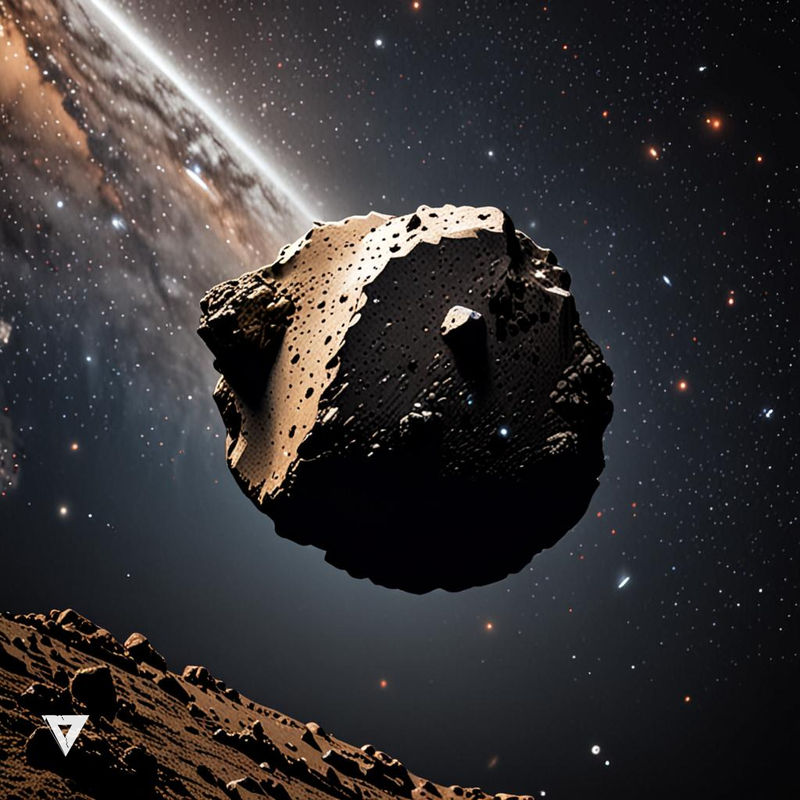
By using data from the James Webb Space Telescope, astronomers tracked the 60-meter asteroid 2024 YR4 through the deep black of space. In late 2024, scientists calculated a tiny probability of impact for the month of December in 2032 before more data arrived.
After experts gathered more sightings, the mathematical models for this asteroid narrowed to a single safe route. Under the rules of orbital mechanics, a cone of uncertainty describes the many paths an object might take based on initial sightings. By studying the flight path with advanced infrared sensors, researchers confirmed that the rock will pass thousands of miles away from the Moon.
The Cost of High Precision Tracking
To find the exact location of a distant rock, telescopes must focus on narrow paths while ignoring the rest of the sky. This high level of focus is essential for planetary defense, as even a small margin of error can result in vastly different orbital projections.
The Current Status of Planetary Safety
Current radar networks in places like Goldstone scan the stars every single night for any sign of movement. These facilities provide the data necessary to identify potential threats long before they become a danger to Earth.
Hidden Gifts from the Cosmic Void
- Small asteroids like 2024 YR4 serve as ideal practice targets for future missions involving gravity tractors and deflection tests.
- By tracking how sunlight pushes against these rocks, physicists verify the Yarkovsky effect to predict orbits with high precision.
- Every close encounter allows infrared sensors to scan for mineral deposits that could support future stations in high orbit.
The Funding Conflict for Sky Defense
The European Space Agency suggests that 1 percent of the global space budget should fund planetary defense systems. Is this enough? We should be asking why 10 times more is being spent on entertainment satellites than on asteroid deflection. Afterall a missed rock can cost more than the total global economy. How many telescopes do we need to feel truly secure? If a rock hits a remote ocean, would the splash still destroy coastal cities? Private firms like SpaceX could potentially handle planetary defense for a lower price than government agencies. Market competition might be the best way to save the species.
Fresh Shields and Sky Surveys
The NEO Surveyor mission prepares for launch to find 90 percent of asteroids larger than 140 meters. Along with this launch, the Minor Planet Center added 500 new objects to the risk list this month.
Progress in Orbital Discovery
The Vera C. Rubin Observatory is nearing completion and preparing to begin its full survey of the southern sky to find millions of asteroids. Additionally, the Gemini North telescope recently refined the orbit of 2024 YR4 to a distance far beyond the lunar orbit, confirming the path is clear for the foreseeable future.
Have thoughts on this article?
Send your feedback. Spotted a factual error or typo? Use this form to let us know. We use your feedback to improve our reporting. Thank you!
 Moon Exploration And The Space Launch System