Bezos Blasts Off Into Uncharted Territory: Can TeraWave Revolutionize Global Connectivity And Leav…
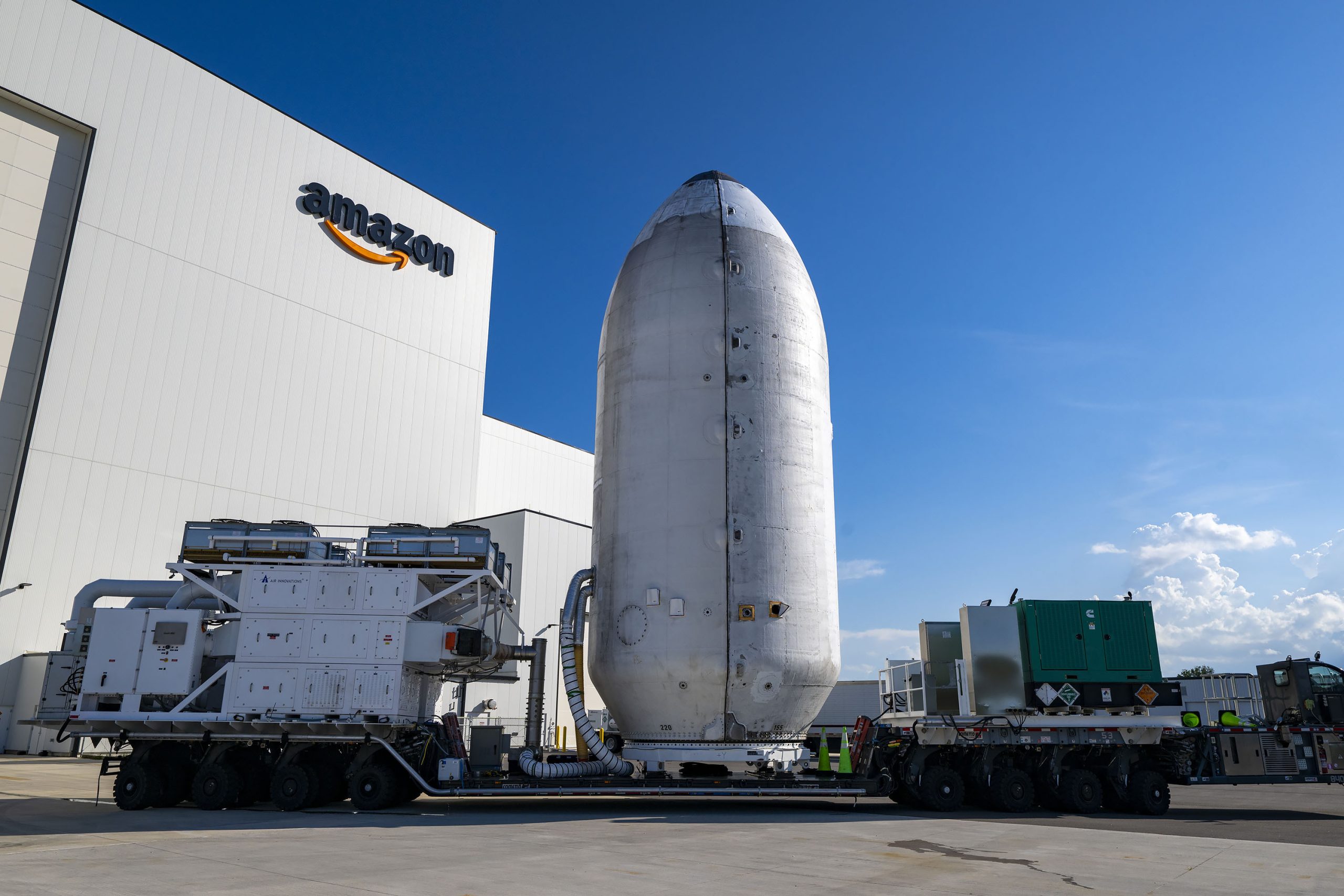
Jeff Bezos pivots from the warehouse floor to the thermosphere. TeraWave represents a challenge to the orbital status quo. I’ve noticed the Federal Communications Commission paperwork signals a shift in the billionaire’s appetite for risk. This constellation claims territory in low Earth orbit.
Engineers target the E-band and the W-band to bypass the congestion of lower frequencies.
These spectral lanes offer throughput that rivals terrestrial glass. Signals bypass the atmosphere with the efficiency of a bullet train. While legacy providers cling to copper wire and aging glass, Blue Origin builds a highway in the stars.
The New Glenn rocket serves as the pack mule for this venture. Its reusable first stage drops the price of admission to the heavens.
Each launch dumps hardware into the void at a fraction of the historical cost. Bezos bets his treasury on the premise that global connectivity remains an untapped gold mine.
Artificial intelligence drives this hunger for data. Large language models require a nervous system that spans continents without delay.
TeraWave links the Amazon canopy to the skyscrapers of Manhattan. While the rockets roar over the scrubland of the Texas desert, the true victory occurs in the silent exchange of photons between machines that move at seventeen thousand miles per hour.
The lattice of laser beams eliminates the need for ground stations in every territory.
Hall-effect thrusters push against the magnetic field of the planet to keep the fleet in formation. Gallium arsenide cells drink the light of the sun to power the processors. This architecture removes the reliance on subsea cables buried under the salt of the ocean floor.
The assembly line in Florida pulses with the rhythm of heavy industry.
Robots fuse aluminum panels. Technicians calibrate sensors under the glare of sterile lights. Thermal vacuum chambers bake the components to ensure they survive the brutal swing of orbital temperatures. The scale of the factory matches the scope of the ambition.
Profitability hinges on the enterprise market. Governments seek secure channels.
Airlines want bandwidth for the back seat. Shipping firms will monitor hulls across the vastness of the Pacific. I’m convinced that the return on investment will reorganize the balance sheets of the telecommunications sector. Quest means business!
Bonus: Orbital Throughput Analysis
| Project | Spectrum Band | Target Speed | Network Latency |
|---|---|---|---|
| TeraWave | E-Band / W-Band | 1.2 Gbps | < 25ms |
| Legacy Geostationary | Ku-Band | 100 Mbps | > 600ms |
| Fiber Optic (Terrestrial) | Infrared | 1.0 Gbps | < 10ms |
For more information, visit the official Blue Origin site or review the FCC Satellite Licensing Database. Detailed aerospace analysis can be found at SpaceNews.
What got you thinking
The rush to populate the thermosphere raises questions about orbital sovereignty and the management of the commons.
As private entities launch thousands of units, the risk of collision increases. This “Kessler Syndrome” could trap humanity on Earth if a chain reaction of debris destroys the orbital corridor. We must weigh the benefits of a connected rainforest against the possibility of a sky filled with shrapnel.
Additional Reads & Case Studies
- The Kessler Effect: A study by NASA on the density of objects in Low Earth Orbit.
- Spectrum Wars: An analysis of the FCC auction of the 70GHz and 80GHz bands for non-geostationary use.
- Project Kuiper vs.
Starlink:
A Harvard Business School case study on the first-mover advantage in satellite internet. - Optical Inter-satellite Links (OISL): Technical white paper on laser communication in a vacuum.