Cosmic Alignment Over Florida: Rare Planetary Parade Reminds Us Of Our Place In The Universe
The Mechanics of the Cosmos Over Florida
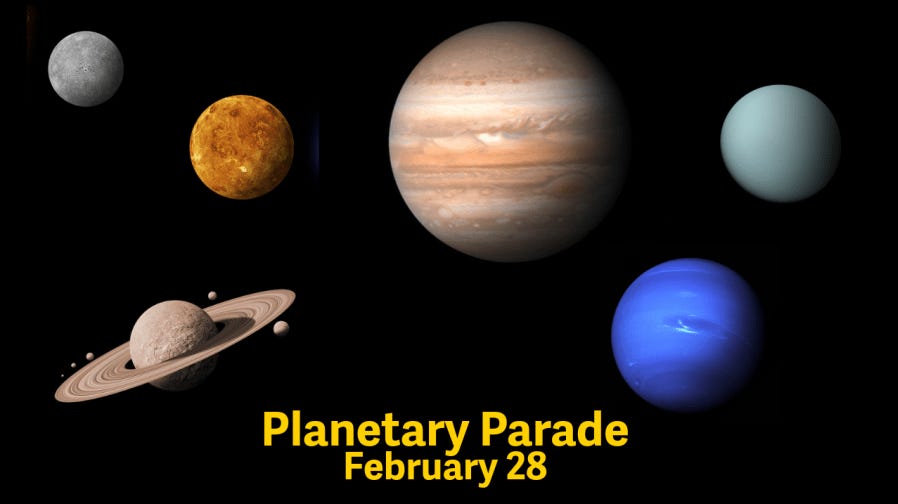
The solar system staged a display of clockwork motion that reminded us of our place in the void. Six planets clustered within a singular corridor of the sky during the final weeks of February. Let’s be real for a second; we often ignore the machinery of the heavens until the heavens demand our attention.
This specific configuration placed Mars in proximity to Jupiter while Saturn emerged in the predawn twilight. Uranus and Neptune occupied the higher reaches of the atmosphere as Mercury lingered near the horizon. I witnessed this phenomenon from a pier in Brevard County where the dark sky meets the Atlantic Ocean.
Orbital mechanics dictated this arrangement with mathematical precision.
The inner planets sprinted around the sun. Gas giants plodded through their orbits. This convergence required every sphere to inhabit a specific coordinate within the human field of vision. Sunlight bounced off the thick clouds of Jupiter and the iron dust of Mars. These gas giants appeared as steady beacons rather than the flickering sparks associated with distant stars.
Gravity pulls these spheres into position without regard for terrestrial events or human history.
Florida residents enjoyed a superior vantage point because the southern latitude of the state shifted the perspective of the sky. This geographic position pushed the ecliptic plane higher above the horizon than in northern territories.
Skywatchers utilized high-powered binoculars to catch the faint glows of Uranus and Neptune. These worlds remain invisible to the naked eye under normal conditions. The peak of this planetary parade occurred between February 20 and the start of March. People stood on beaches in the silence of the four o’clock hour to watch the cosmos shift.
The sheer volume of the Jovian atmosphere makes the Earth seem like a grain of sand.
Photographers employed long-exposure techniques to harvest light from the furthest edges of our system. This alignment forced a pause in the daily rush as citizens looked upward to observe the mechanics of the universe. I’m convinced that the observation of such scale provides a necessary corrective to our often narrow focus on the immediate and the trivial.
Bonus Timeline: The Shift of March 2026
On March 5, 2026, the visual grouping began a phase of dispersal.
The sun swallowed Mercury into its glare several days ago. Mars now ascends into the evening canopy. Scientists at the Kennedy Space Center track the minute changes in gravitational pull that result from such a gathering. Data streams from the James Webb Space Telescope recently confirmed that the thermal signatures of the ice giants remained stable throughout the event.
Amateur astronomers have already started uploading thousands of high-resolution images to global databases for public study.
The next gathering of this magnitude will not occur for another decade. Astronomers now analyze the light curves captured during the peak to refine our understanding of orbital perturbations. This data helps calculate the precise future positions of these bodies for the next century of space flight.
The event concluded with a final alignment of the Moon which passed through the planetary line on the first of the month.
Did You Know?
A planetary alignment is technically called a syzygy. This term refers to three or more celestial bodies moving into a straight line within a gravitational system. While the planets appear close together from our porch, they remain hundreds of millions of miles apart in the vacuum of space.
The light you see from Jupiter took over forty minutes to reach your eyes. This means you are looking at the past every time you peer through a telescope.
Places of Interest
The Kennedy Space Center Visitor Complex: This facility offers the most advanced astronomical displays and historical context for planetary observation in Florida.
Canaveral National Seashore: This park provides some of the lowest light pollution levels on the Atlantic coast for night sky photography.
The Buehler Planetarium: Located in Davie, this site hosts public viewing events using professional-grade equipment for deep-space observation.
Additional Reads
NASA: Understanding Planetary Alignments