Flex-Cat: North Carolina State University's AI Robot Revolutionizes Catalyst Discovery
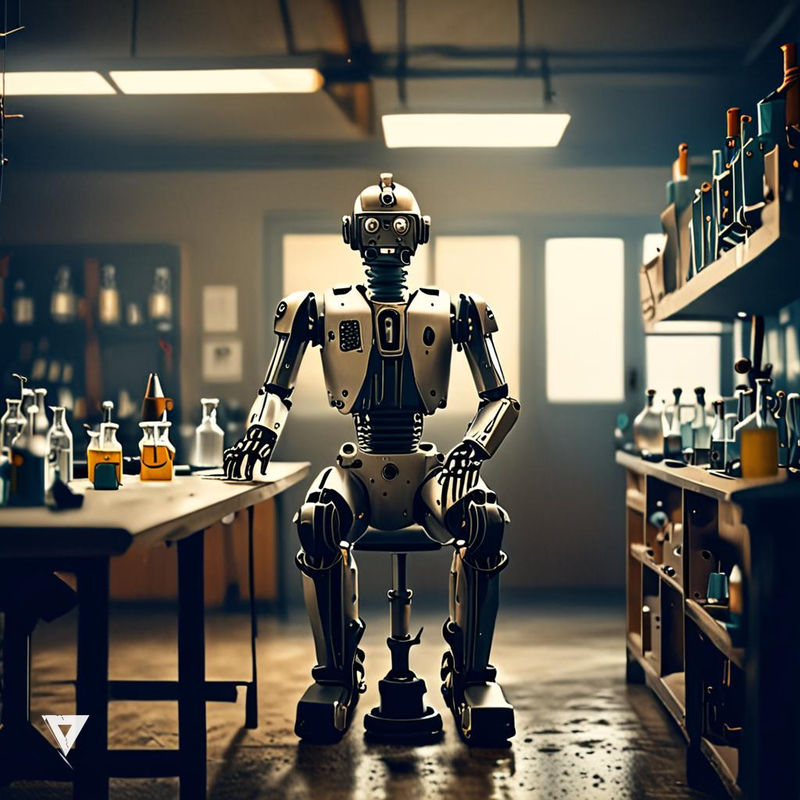
The Giant Leap for Everyday Molecules
In a quiet room at North Carolina State University, a machine is changing the way we make things. Almost everything you touch today, from the plastic casing on your phone to the medicine in your cabinet, relies on catalysts. These are chemical matchmakers that speed up reactions.
Normally, finding the right catalyst takes years of boring work in a lab. Now, a robot named Flex-Cat does it alone.
And it does this without needing a single coffee break.
This machine is a self-driving lab that can mix, heat, and test hundreds of chemical recipes on its own. It solves a massive headache for the global chemical market.
Inside the Autonomous Chemistry Engine
With incredible speed, the robot handles high-pressure gas and liquid runs to build aldehydes. These are the chemical building blocks for soaps, perfumes, and plastics. In the past, chemists had to manually change the heat and pressure for every single test. Flex-Cat uses its artificial intelligence brain to choose its own next step based on the data it just gathered.
For example, it targets hydroformylation, a reaction that can produce two different shapes of the same molecule.
By tweaking the pressure of carbon monoxide and hydrogen, the robot can switch from making plastic ingredients to making cosmetic ingredients on a dime. The machine learns as it goes, mastering the tricky physics of high-pressure reactors.
The Battle for the Soul of the Chemistry Bench
Across the scientific community, this robot has started a loud, passionate fight. Traditional chemists love the art of the bench, and they argue that robots lack true human intuition. But let us be honest.
Humans are slow, they get tired, and they dislike repeating the same test a thousand times.
During the recent Materials Research Society meetings, critics openly worried that AI would push young scientists out of the lab. Yet, the real-world results show the opposite.
We are freeing human minds to do actual thinking.
We are finally ending the era of the human spatula.
What the Robot Does When Humans Go Home
During the hot nights of June 2026, while the researchers sleep, the Flex-Cat system runs constantly in Raleigh. It uses a special Bayesian optimization algorithm to map out massive, multi-dimensional search spaces.
It does this at pressures reaching up to several atmospheres, a dangerous zone where human errors can lead to serious explosions.
According to recent data from the Nature Communications publication, the platform successfully evaluated hundreds of distinct operational states in a fraction of the usual time. It found new ways to use cheap, abundant metals instead of expensive precious metals like rhodium.
That is a massive win for green chemistry.
Have thoughts on this article?
Send your feedback. Spotted a factual error or typo? Use this form to let us know. We use your feedback to improve our reporting. Thank you!
 The Big Bluff Behind Your Next Computer Upgrade