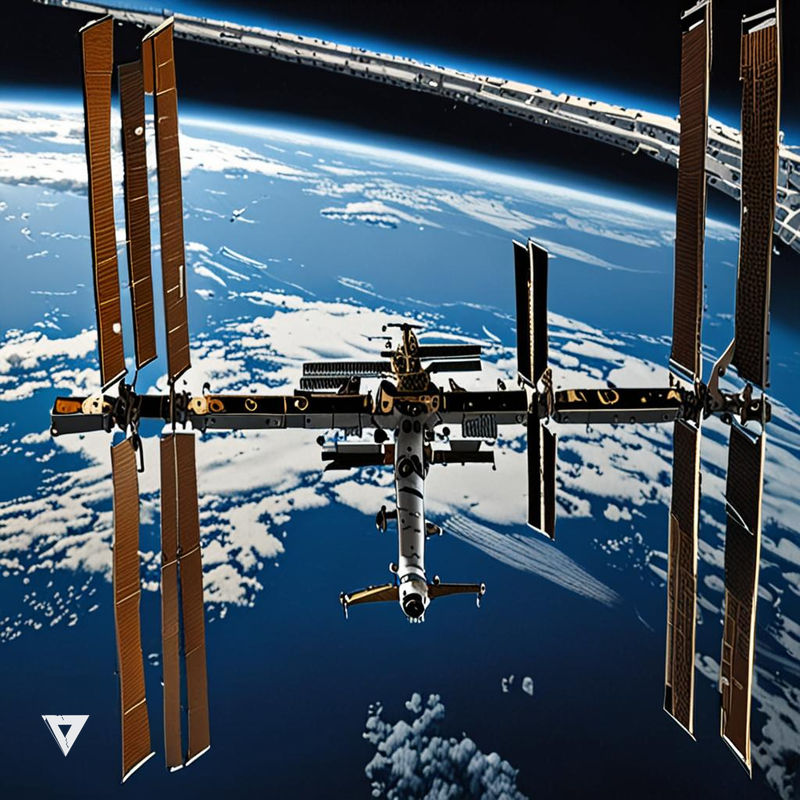
In the freezing vacuum of space, a tiny crack can ruin the grandest human project. Today, on June 20, 2026, the International Space Station is slowly bleeding its breath into the void. This is not a distant threat. It is happening right now. For seven years, the Russian Zvezda module has leaked precious air through its transfer tunnel.
The leak recently spiked to a worrying two pounds of air every single day. The world's two biggest space powers are actively fighting over a handsaw.
Decoding the Screaming Metal
To understand why this metal is tearing apart, we have to look at how we build things for orbit.The Zvezda transfer tunnel, known as the PrK, connects the main Russian living quarters to a docking port where heavy cargo ships crash their weight into the station.
Every time a Progress cargo ship docks, it sends massive shockwaves through the thin aluminum hull. Over many years, these impacts create tiny micro-fissures along the weld lines.
And these are not normal cracks.
How Tiny Vibrations Threaten Our Only Orbital Outpost
These microscopic tears are further aggravated by silent forces constantly at work deep inside the structure of the station.Every time the massive solar arrays rotate to face the sun, they send tiny shakes through the steel truss.
Over twenty-five years, these constant shakes have weakened the metal joints.
This is called metal fatigue.
It is the very same force that makes a paperclip snap after you bend it back and forth too many times.
No amount of glue or tape can easily fix a metal hull that has simply grown too old to stay together.
The Great Orbital Tool Fight
Because no amount of glue or tape can easily fix a metal hull suffering from such deep-seated structural wear, the tension between international partners over how to handle the repairs has reached a boiling point.During these tense moments, the absolute absurdity of space diplomacy comes to light.
Russian engineers at Roscosmos decided that the best way to fix a high-tech leak is with a simple handsaw and a drill.
They want to cut off a metal support bracket inside the tunnel to get a better look at the cracks.
But NASA engineers are absolutely terrified of this plan. They know that this bracket keeps the entire tunnel from collapsing under the intense pressure of space.
To make their point clear, NASA ordered the crew of the SpaceX Crew-12 mission, including astronaut Chris Williams, to flee into their docked Dragon capsule for safety.
It was a silent protest in the stars.
What Lies Beyond the Leaking Hatch
As this high-altitude standoff highlights the fragility of our current orbital infrastructure, it forces us to look toward the future of how we build structures in the cosmos.I bet you never realized how this standoff could change our entire approach to living in space.
- We might see the end of metal hulls entirely.
Future stations could use thick, flexible fabric walls that absorb impact energy rather than cracking under stress.
- Space agencies will likely build fully modular segments that we can easily discard.
If a room leaks, we will simply unbolt it and let it burn up in the atmosphere.
- Robot repair swarms could soon live on the outside of the station.
These tiny machines would use liquid polymers to seal microscopic holes before humans even notice them.
How Self-Healing Metals Solve the Orbital Fatigue Crisis
While external robots and modular designs offer practical workarounds, an even more revolutionary material technology could soon allow spacecraft to repair themselves from within.For me, the most exciting fix is the idea of self-healing metals.
During laboratory experiments, researchers at Sandia National Laboratories watched microscopic cracks in platinum glue themselves back together.
This process happens without any human help. By using these smart materials in our hulls, future space stations will fix their own leaks instantly.
It is a beautiful, organic solution to a brutal mechanical problem.
Have thoughts on this article?
Send your feedback. Spotted a factual error or typo? Use this form to let us know. We use your feedback to improve our reporting. Thank you!
 Rosie O'Donnell's Triumphant Return To Late-Night Spotlight On Jimmy Kimmel Live!