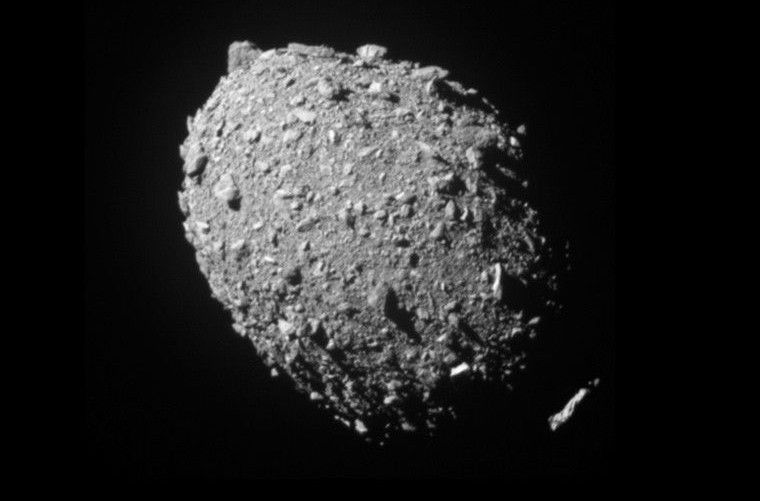
Metal against stone. A machine from Earth moved a mountain of the sky. Intent of humans moved the moonlet. The target shifted. I have spent hours of the night thinking about this while talking to the teams at the laboratory in Maryland who saw the frames of stone before the silence. They watched the screen as the impact occurred.
The spacecraft acted as an impactor; the spray of boulders created a recoil.
Gravity changed. Scientists measured the period of the orbit before the strike and again after the collision. The results show a change of thirty-two minutes. Knowledge grows. It’s a bit of a toss-up whether every asteroid will react with force. These observations improve the models for safety. Look at the telemetry.
The Debrief provided information regarding the cloud of debris that helped experts calculate the transfer of momentum.
Bonus background
Dust in the void. The LICIACube satellite from Italy filmed the event.
This craft captured the plume of dust. The Hera mission is now on the way to the system to survey the crater. It will study the structure of the interior. Use the data from the Hubble Space Telescope to see the tail of the asteroid.
The name Didymos comes from the word for twin. Experts will monitor the trajectory to ensure the models match the reality of the vacuum.
Did you know?
The moonlet Dimorphos has the mass of five billion kilograms. The speed of the hit reached six kilometers per second. This collision moved enough material to fill seven rail cars.
Timelines and Places of Interest
The collision occurred in September 2022. Launch of Hera took place in October 2024. Arrival of the craft happens in December 2026. The site of focus is the asteroid system at 65803 Didymos. The laboratory at Johns Hopkins managed the flight.
Additional Reads
 85% Of Corporate Town Residents Trade Privacy For Convenience [Flash Fiction]
 Building Infrastructure [Character Study]