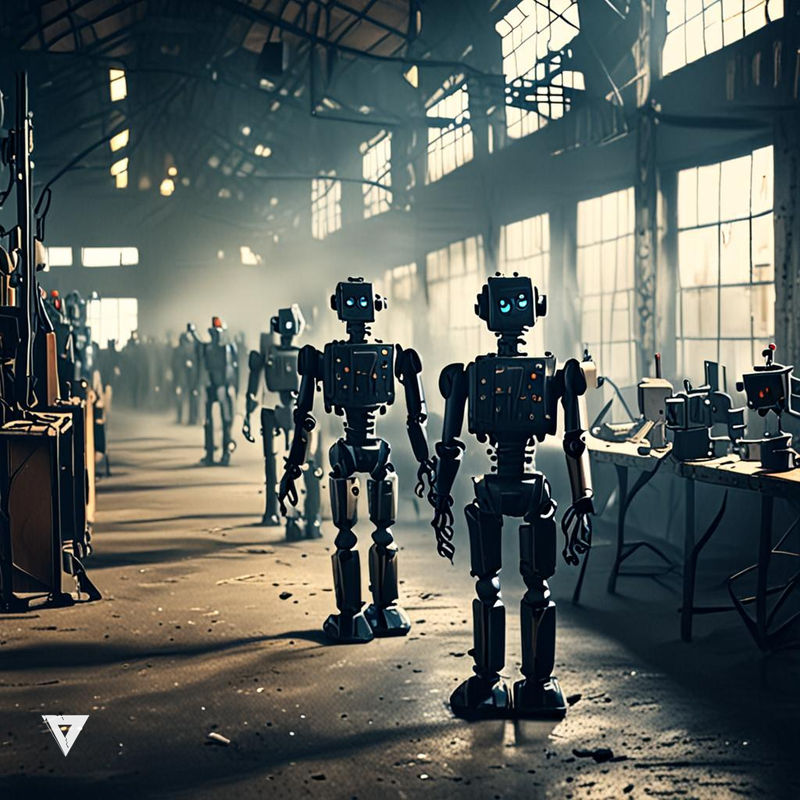
ABB Robotics brought the PoWa family into the light this week. These machines handle weights between 7 and 30 kilograms across six distinct versions. For years, the world suffered through a choice between weak cobots and giant industrial monsters. Now, the PoWa line fills that void, bringing raw strength to tight spaces without needing a massive cage. Manufacturers can now automate heavy tasks like machine tending and arc welding with ease, fitting these robots into small corners where a human once stood.
This leap in versatility comes at a time of significant corporate transition. In October 2025, a massive shift occurred when SoftBank Group bought the ABB robotics wing for $5.3 billion. This move happened just as experts predicted the cobot market would grow by 20% every year until 2028. With 7,000 employees and a huge base in Auburn Hills, Michigan, this team is rewriting how factories look. The sale marks a new era of aggressive growth under Japanese ownership focused on the future of physical labor.
Supporting this expansion is a commitment to performance that has been proven through rigorous hardware validation.
Beta test section
During the early trials, engineers pushed these arms to their limits. In one test, a PoWa arm performed 100,000 cycles of high-speed arc welding without a single hitch. Because the software predicts movement so well, the arm avoids the jerky stops that bother older models.
It moves like a dancer with a heavy wrench, and testers found that even at maximum speed, the vibrations remained nearly zero, keeping the welds clean and the parts perfect.
This external performance is made possible by the intricate technology hidden within the robot’s internal structure.
Observing a microscopic view
At the level of the joints, the PoWa uses high-resolution sensors that check position thousands of times every second. If a human finger brushes against the arm, the sensors feel the change in force instantly, stopping the robot before it can cause injury. This sensitivity allows for “lead-through” programming, where you simply grab the robot’s hand and show it what to do. Inside the gearbox, specialized oil reduces heat during 24-hour shifts, preventing the metal from expanding and losing accuracy.
These engineering details support a wider range of capabilities that are reshaping the industry.
I bet you never realized
- Cobots might soon repair other robots in dark, unheated warehouses to save energy.
- The PoWa’s compact size means factories can pack twice as many machines into the same floor space.
- New software allows these robots to learn a task by watching a video of a human doing it.
- The OmniCore controller used here cuts energy use by 20 percent compared to older boxes.
Ultimately, these technical milestones are shifting the very nature of industrial work.
How Moving Parts Will Change Our Daily Labor
We must look at the sheer audacity of putting a 30kg payload on a friendly arm. Before this, you needed a forklift or a massive yellow cage for that kind of lifting. It is time we stop forcing people to break their backs on loading docks. I saw a demo where a PoWa arm sorted tiny, recycled electronics with more care than a jeweler, picking up a glass screen and a heavy battery with the same grace.
This machine is a masterpiece of motor control designed to free workers from drudgery.
With the International Federation of Robotics tracking these surges, the rise of the machine is here—it is fast, it is strong, and it is finally safe to stand next to.
Have thoughts on this article?
Send your feedback. Spotted a factual error or typo? Use this form to let us know. We use your feedback to improve our reporting. Thank you!
 Prioritizing Code Safety With UK Gov & Experts
 Etna Is The Earth’s Most Annoying Rule Breaker