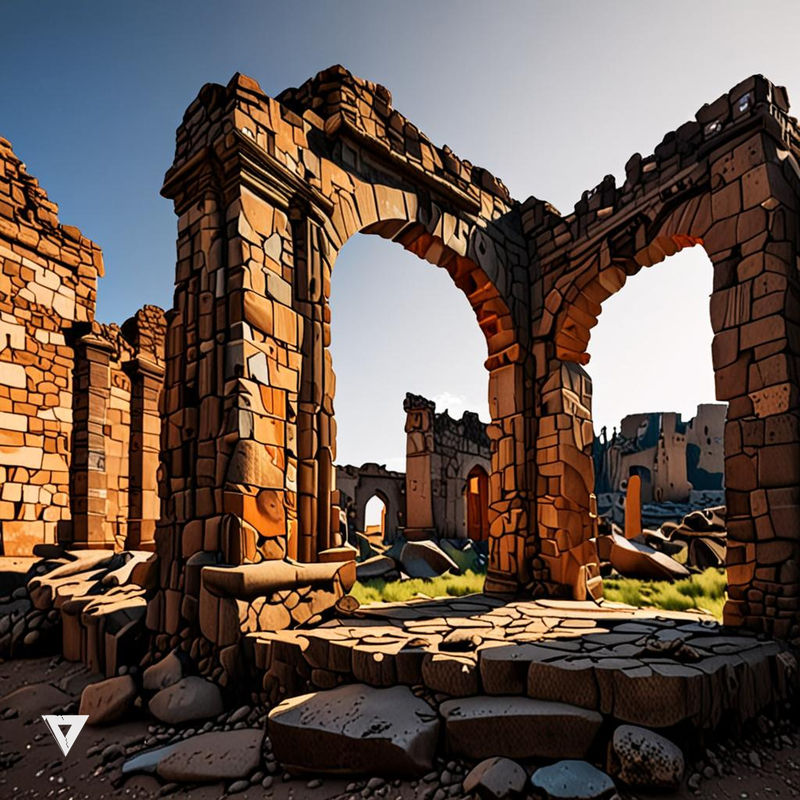
Neolithic people in the Middle East used a smart way to make plaster nine thousand years ago, long before the Roman Empire existed. These ancient people lived in a place called Ba'ja, which is in modern-day Jordan.
They made floors and walls that stayed strong for thousands of years by using a special rock called dolomite.
It is a bold move to call something "Roman" when it was already old news in the Stone Age; these early builders were real chemists without a lab.
Dolomite makes a plaster that is much harder than regular lime and blocks water better than the materials most people used in the past. However, working with this mineral is a significant technical challenge. These Neolithic builders had to be master fire-keepers, experts in a craft that we previously thought was invented much later. They achieved a level of durability that was not seen again for millennia.
Ancient Roman builders eventually used this same dolomite trick to make their famous concrete and plasters, seen today in the Pantheon and big water bridges. The Roman expert Vitruvius wrote about these materials in the first century, believing he was recording the best modern tech of his time. In reality, he was describing a secret that was already eight thousand years old. Because the Romans were great at writing things down, they received the credit while history forgot the people who did the work first.
Understanding why this technology stayed hidden for so long requires looking at the intense physical demands of the production process.
The Terrible Stress of Burning Rock
Making this plaster is a high-stakes game where you are basically trying to cook a rock until it changes its soul. Because dolomite has magnesium in it, it behaves differently than simple limestone. You have to balance the heat between 700 and 900 degrees Celsius for a long time. If the fire is too cold, nothing happens; if it is too hot, the whole batch is ruined.
It is a very finicky process that requires a lot of wood and a lot of patience.
This is why you do not see it everywhere in the ancient world, as only the most skilled groups could pull it off without wasting all their fuel.
Despite these technical challenges, the history of this material reveals a massive gap in human engineering records, showing that the skill was not a continuous tradition but a rediscovered art.
A Quick Walk Through the Timeline
In 7000 BCE, people at Ba'ja were already finishing dolomite floors that were so tough they looked like stone. Then, for thousands of years, this specific skill seemed to fade away from the record. Around 30 BCE, Roman engineers started using it again for their big projects to handle the wet and the heat of the Mediterranean.
Today, scientists use high-tech X-rays to look at these old walls, finding the same chemical signature in both the Stone Age ruins and the Roman ones. To understand how these two distant eras achieved the same results, we must look at the specific steps taken on the construction site.
How They Actually Built the Walls
The method starts with gathering heavy dolomite stones from nearby hills and crushing them into smaller bits to help them burn evenly. Builders constructed massive kilns that could hold a steady, glowing heat for days. Once the rock turned into lime, they ground it into a fine powder and mixed it with water to make a thick, wet paste.
Workers applied the paste in thin layers over stone walls or dirt floors, working fast before the paste turned back into hard rock. Finally, they used smooth stones to rub the surface until it reached a dense, stone-like finish.
Because the method was so labor-intensive and precise, it was highly vulnerable to being forgotten during times of upheaval.
Why Did This Genius Knowledge Vanish?
It is strange that such a good idea would go missing for so long. Here are some reasons why the skill might have been lost before the Romans found it again:
- The recipes were likely kept as family secrets and never shared with outsiders.
- A sudden change in the local weather might have made wood too scarce to keep the big fires burning.
- When people moved to new lands, they might have settled where there was no dolomite rock to find.
- The math and timing needed for the kilns were too hard to teach without a school system.
Yet, when the conditions were right and the resources were available, this technical mastery was used for more than just survival.
The Stunning Red Floors of the Levant
Neolithic people were not just focused on strength; they wanted beauty, too. At sites like Tell Halula and Ba'ja, they mixed red iron minerals into their plaster. They created bright, blood-red floors that were polished until they mirrored the sky. This is a level of style that is hard to find even in modern homes, making a statement about their wealth and their skill.
Using dolomite was a radical choice because it was so hard to do, yet they did it for the sake of art. This same spirit is visible in the great Roman villas thousands of years later.
The drive to create something lasting and lovely is the thread that connects us all through time.
Have thoughts on this article?
Send your feedback. Spotted a factual error or typo? Use this form to let us know. We use your feedback to improve our reporting. Thank you!
 The Action Board Flips For A New Mission
 The Thunder Of Progress: SpaceX Delivers The Goods