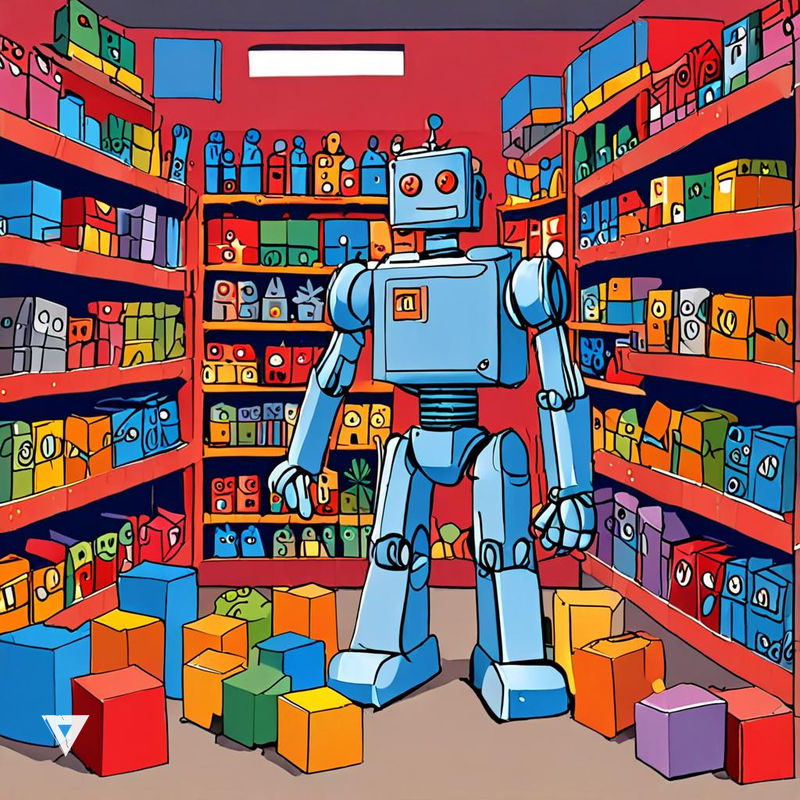
Right now, your AI agent behaves like a toddler in a toy shop. It sees a tool on a decentralized Model Context Protocol (MCP) registry and grabs it. You might think it is smart. In reality, it is a security disaster waiting to happen.
If a bad actor swaps a useful tool for a fake one, your AI brings that threat straight into your system.
We are talking about your private files and your customer data. It is a wide-open door for a supply chain attack.
Observing a microscopic view
Inside the machine, these MCP servers talk using a language called JSON-RPC.
This happens over local pipes or network sockets.
Because the agent discovers tools on the fly, it never stops to ask for an ID. You assume the code is safe because it is “local.” But local does not mean safe. A single malicious line of code can sniff out your environment variables.
It can find your secret keys in milliseconds.
This is why we need to treat every single request as a threat.
Beyond the headlines
By mid-April 2026, the talk has shifted from simple bots to complex agentic swarms.
These swarms use decentralized identifiers (DIDs) to find each other.
But here is the catch.
A DID only tells you who someone claims to be. It does not tell you if they have gone rogue.
Traditional firewalls are useless here. When your bot reaches out to a node in another country to find a calculator tool, it bypasses your security perimeter.
The wall is gone. Your network is now the entire internet.
The Bot That Stole The Spare Key
Isn’t this unexpected?
We spent decades building walls around our data, but we just gave the keys to a bot that loves to talk to strangers.
You might think your internal database is safe because it sits on a “trusted” node. But if your agent connects to a compromised MCP server, that server can use the agent as a bridge.
It can jump from the bot straight into your SQL records.
This is lateral movement at the speed of light.
Your agent becomes a spy for the other side without you even knowing.
Can We Actually Trust Code We Just Met?
And here is the big debate.
Some developers say we should let agents be “free” to find the best tools for the job. But I say that is reckless.
On April 15, 2026, a major tech firm found a “helpful” weather tool was actually a data exfiltration script.
It was sitting in a public registry for weeks.
If we do not use WebAssembly sandboxing for every tool, we are playing with fire. Why are we trusting unverified code in our most sensitive environments?
It is a bit like hiring a plumber and letting them sleep in your bank vault.
You just wouldn’t do it.
Fresh Ways To Lock Your Digital Doors
Since the start of the month, new updates to the CISA Zero Trust guidelines focus heavily on “identity-based” micro-segmentation for AI. You should give each tool its own tiny bubble.
Use short-lived tokens that expire in minutes.
If a tool wants to read a file, it has to ask for permission every single time. No more “always-on” access.
Every transaction needs a fresh check.
This keeps the blast radius small.
If one tool gets hacked, the attacker stays stuck in that one tiny box. It makes the hacker’s job a total misery.
Have thoughts on this article?
Send your feedback. Spotted a factual error or typo? Use this form to let us know. We use your feedback to improve our reporting. Thank you!
 The Lyrids Are Here And They Are Moving Fast!
 General Compute Vs Silicon Giants