The big picture
The math is clear. Researchers at the Korea Institute of Energy Research just compressed a month of work into a single day. A process that took 32 days of manual labor now finishes in 17 hours. This is a 45-fold jump in speed. I noticed the data suggests a total overhaul of laboratory productivity.
The team led by Dr. Ji Chan Park achieved this by removing the human factor from catalyst testing. This matters because energy solutions cannot wait for slow experiments. I looked at the reports on phys.org and the efficiency gains are undeniable. This is not a small step. It is a sprint.
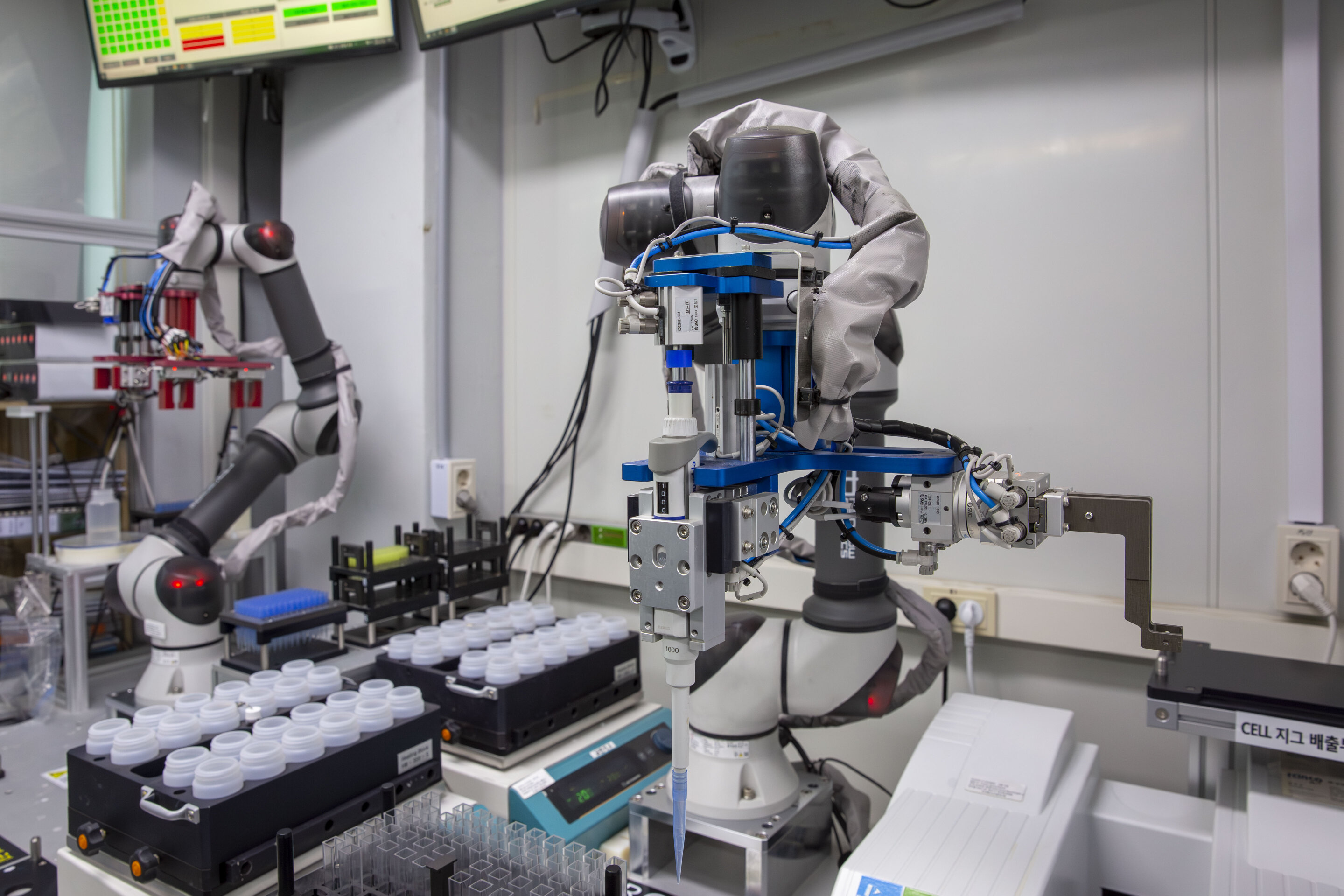
Two robots now handle the entire workflow.
The first robot identifies the samples. It places the containers. It runs the spectral analysis. The second robot manages the consumables for long experiments. This coordination allows for 24-hour operation without breaks. I reckon the removal of human error is the biggest victory here. Different researchers produce different results with the same materials.
The machines do not. But the robots maintain a level of precision that people cannot match over long shifts. According to phys.org, the automation covers everything from sample loading to data recording. No one has to stand over a workbench anymore.
Speaking for myself, I find the timeline shift the most impressive part of the data.
Scientists used to spend weeks on repetitive movements. Now they can focus on the chemistry of clean fuels. And the system handles the heavy lifting. The robots follow a scenario that dictates the measurement time and the sequence plus the sample identification. This removes the delays caused by personnel handovers. I think we are seeing the end of the laboratory bottleneck.
The results are faster. The results are better. This technology puts the pursuit of clean energy on a high-speed track.
The 17-Hour Revolution
The lab in Daejeon breathes without lungs. I noticed the silence of the facility during a recent review of the automated hardware. A task requiring 768 hours of human endurance now concludes in less than a day.
This 45-fold velocity gain defines the current era of material science. Machines do not tire. They do not tremble. They do not skip steps to catch a bus home. And this reliability permits a level of data density that humans cannot replicate. My two cents? The chemistry happens in the software before the first vial even moves.
Hardware handles the grunt work.
The primary unit scans the barcode. It aligns the vial for the laser. It initiates the scan. A secondary unit refills the tanks to prevent downtime. I think the removal of human sweat from the process is the real victory. Variation in thumb pressure on a pipette used to skew the results. Now the pressure remains constant to the millibar.
But the robots do more than move glass. They record every millisecond of the reaction. This creates a digital twin of the experiment for future analysis. In my humble opinion, the precision of the grip matters more than the speed of the motor.
Future iterations arrive soon. By December 2026, researchers plan to link these robots to a neural network for real-time decision making.
I reckon we will see the system change its own parameters mid-experiment to optimize fuel yield. The bottleneck is dead. We have the data. We have the speed. Clean energy production is no longer a slow-motion film. I noticed that the integration of liquid handling systems will be the next step for the KIER team.
This will allow for the synthesis of new catalysts without a human technician entering the room. With some reservations about the cost of maintenance, I believe the output justifies the investment.
Performance Metrics and Logic
- Velocity Increase: 4,500 percent compared to manual methods.
- Time Compression: 32 days of labor condensed into 17 hours.
- Human Intervention: Zero required during the active testing cycle.
- Consistency: Elimination of manual pipetting variance.
- Operational Capacity: 24-hour cycle execution without fatigue.
Additional Resources for Research
- Korea Institute of Energy Research (KIER) Official Announcements
- Detailed Breakdown of the KIER Catalyst Bot
- Search for High-Throughput Catalysis Screening Journals
Further Reading
- Automated Synthesis in Clean Energy Production (2025 Edition)
- The Role of Robotics in Reducing Laboratory Waste
- Neural Networks in Catalyst Discovery: What to Expect by 2027
- The Impact of Robotics on Material Science Employment Trends
Get other references and insights here phys.org
 Osaka University Breakthrough: Atom-Scale Gate Mimics Human Nerve Impulses With 100
 Scientists Discover Breakthrough Method To Convert Plastic Waste Into Acetic Acid Using Sunlight …