Global Data Centers Are Becoming Quantum-Resistant, Ensuring Secure Internet For Next Decade
Data centers now house quantum-resistant hardware across the globe. Yahoo Finance highlighted this shift in a report published on February 22 of 2026. I used to think the threat of quantum decryption existed only in science fiction novels but the reality occupies the desks of every security officer today. These professionals are discarding old mathematical models to adopt new security codes.
National agencies are issuing mandates for federal systems.
This transition ensures that state secrets stay secret when future processors reach full capacity. Engineers are embedding new instructions into the silicon of every microchip. This process ensures the integrity of the internet for the next decade.
Corporations are spending billions on this migration. Hardware manufacturers are shipping servers with pre-installed post-quantum protocols while software developers rewrite the foundation of every web browser to ensure that the transition remains invisible to the average person browsing the internet.
This trend brings me to the logic that the digital world is successfully hardening its shells against the arrival of superior computing power.
Encryption protects the bank accounts of farmers in rural villages. Encryption shields the medical records of patients in crowded city clinics. The industry has moved beyond the phase of theoretical papers into the era of mass production.
Every line of new code serves as a brick in a wall that maintains the peace of the digital realm and secures the future of every person who relies on a smartphone for their daily bread.
Investors see the growth in the security sector as a sign of stability. The market for these protections expanded as soon as the standards reached final approval.
Logic dictates that the safety of the global economy depends on these invisible locks. We are watching the construction of a future where data remains the property of its rightful owner.
The National Institute of Standards and Technology finalized the primary algorithms for lattice-based cryptography. This development ended the era of reliance on the RSA system.
Kyber serves as the standard for encryption. Dilithium handles the verification of digital signatures. I remember thinking these names sounded like materials from a science fiction script. These sequences of numbers prevent quantum bits from guessing private keys through brute force.
Optical fiber networks in metropolitan hubs now carry Quantum Key Distribution signals.
This technology relies on individual photons to detect the presence of eavesdroppers. If an intruder attempts to view the transmission, the photon changes its physical state. This alert shuts down the connection. The action prevents the loss of sensitive information before a breach occurs. But here’s where it gets weird—the infrastructure for these light-based keys exists alongside standard internet cables without causing interference.
Cloud providers offer security upgrades as a default feature of every subscription.
Customers no longer pay a premium for the transition to new protocols. Every smartphone manufacturer updated their operating systems to include these math models in the recent January patch. It is a relief to see how the threat of a system collapse turned into a routine update for a handheld device. The hardware handles the new math without draining the battery or slowing down the interface.
Energy consumption in data centers reached a plateau despite the complexity of the new security codes.
Engineers designed specialized accelerators for the silicon. These chips handle the encryption tasks. The main processors remain free for other applications. This efficiency ensures that the carbon footprint of the internet does not expand during the security migration.
Bonus: Hardware Transition Comparison
| Security Standard | Primary Logic | Implementation Date |
|---|---|---|
| RSA-2048 | Prime Factorization | Legacy Systems |
| ML-KEM (Kyber) | Module Lattice-Based Math | Standardized 2024-2025 |
| ML-DSA (Dilithium) | Module Lattice-Based Signatures | Standardized 2024-2025 |
| QKD | Photon State Detection | Infrastructure Rollout 2026 |
Questionnaire
- Which agency finalized the lattice-based algorithms used in current hardware?
- How does Quantum Key Distribution detect an intruder on a fiber optic line?
- Why did the energy consumption of data centers remain stable during the PQC rollout?
- What are the specific names of the encryption and signature standards now in use?
Additional Reads
- NIST Post-Quantum Cryptography Standardization Project – https://csrc.nist.gov/projects/post-quantum-cryptography
- Cloudflare Learning: What is Post-Quantum Cryptography? – https://www.cloudflare.com/learning/security/pqc/what-is-post-quantum-cryptography/
- IBM Quantum Safe Explorer – https://www.ibm.com/quantum/quantum-safe
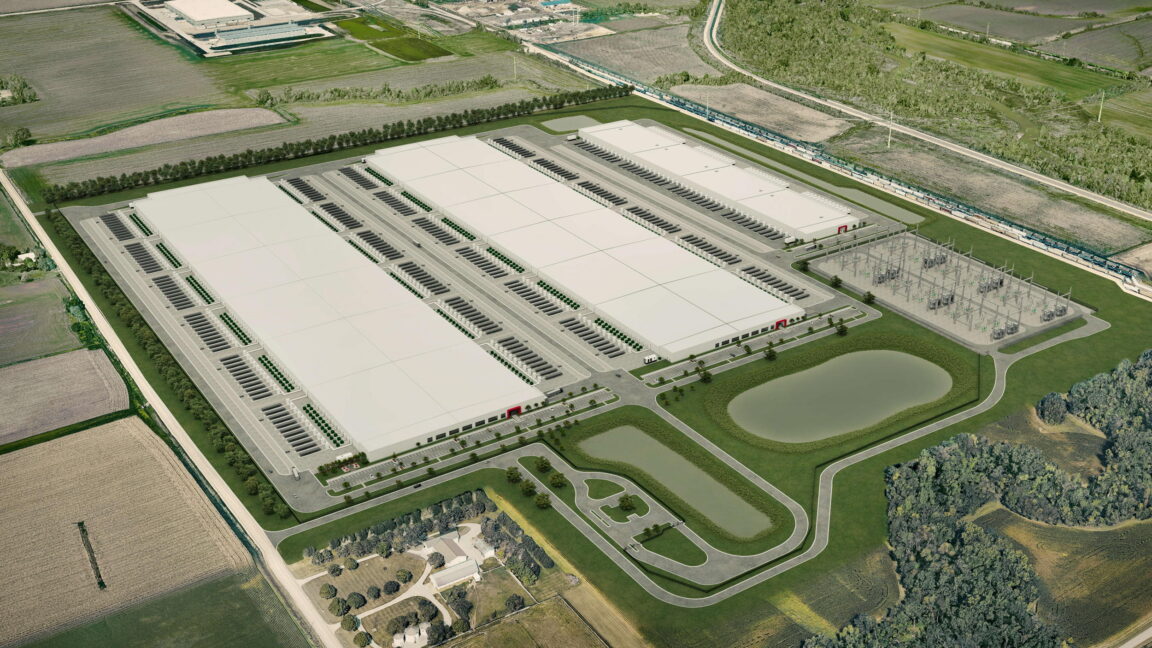 Iowa’s Rural Landscape Transformed: New Zoning Laws Pave Way For Tech Giant’s Server Farms
 Battling Turbulence, Fighting Gravity