NASA Spacecraft Successfully Deflects Asteroid In Historic Planetary Defense Test
Key Takeaways and Primary Findings
A refrigerator-sized spacecraft collided with the asteroid Dimorphos at six kilometers per second. This event proved that kinetic force can alter the flight path of objects in space. The impact shortened the orbit of the asteroid moonlet around its parent body by thirty-three minutes. Data shows that the recoil from ejected rock and dust provided more momentum than the probe itself.
This success provides a template for planetary defense against future threats from space rocks. Research published by phys.org indicates that the debris from the impact offers a window into the composition of the early solar system.
Stop me if you know this one: we are living on a target in a shooting gallery of planetary debris.
For eons, the movement of the heavens was a force of nature that humans could only watch with fear. The thing is, that era of helplessness ended when a machine of metal and circuitry struck a mountain of stone in the vacuum. This changed everything for me. This collision was not an act of destruction but an act of agency that rewrote the map of our solar system.
We have moved from being passive observers of the sky to being the architects of our own safety.
The Double Asteroid Redirection Test hit the asteroid moonlet Dimorphos with the energy of a lightning bolt. Telemetry from NASA confirms the impact altered the track of the entire Didymos system.
I used to think the orbits of planets were fixed laws that no hand could touch. New measurements prove the binary pair now follows a different sequence around the sun. The strike displaced a massive volume of boulders and dust. This spray of material created a recoil effect that pushed the asteroid moonlet with greater force than the mechanical hit.
Engineers found the transfer of momentum was significantly higher than their models suggested. Gravity holds the pair in this new configuration while they continue their journey through the void.
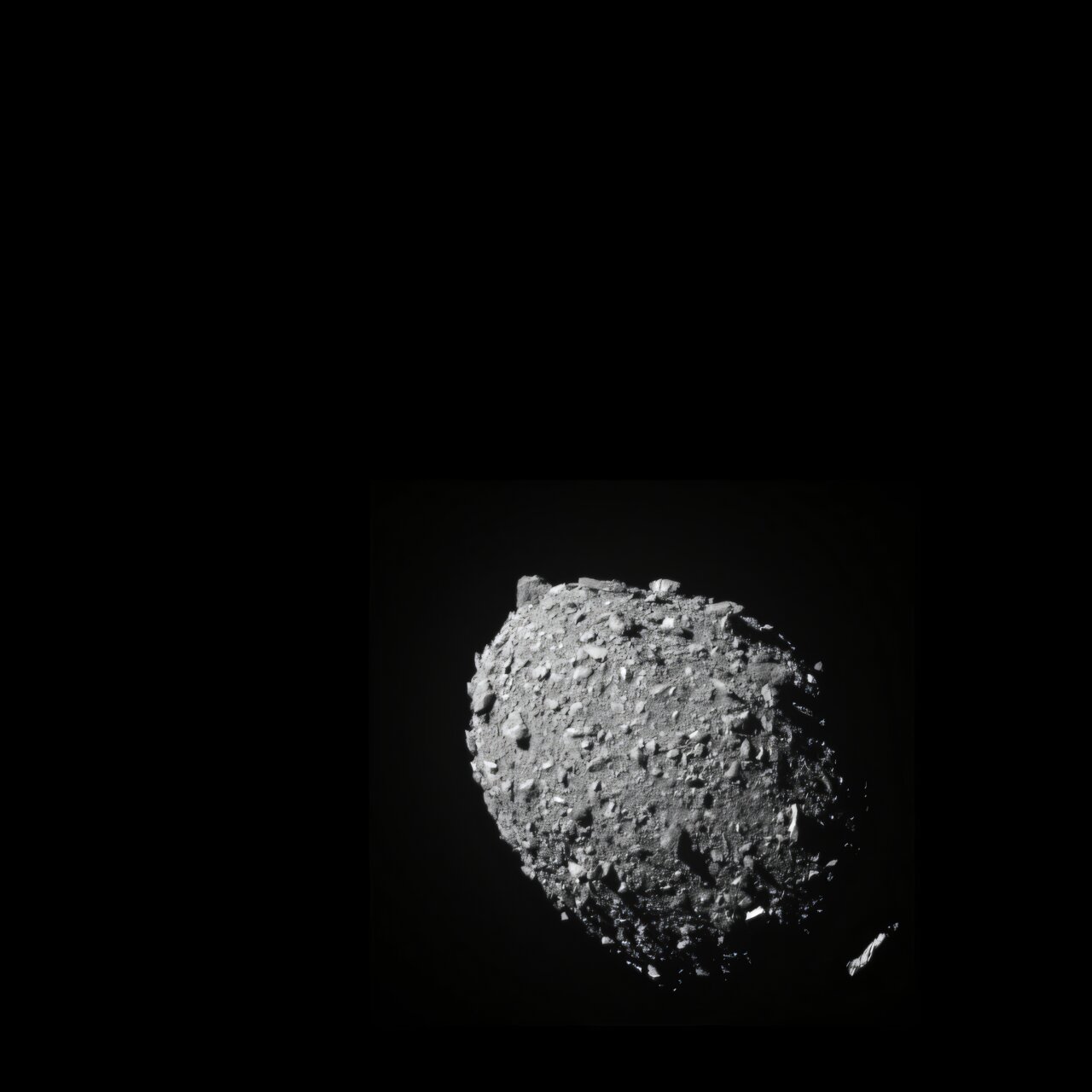
On September 26, 2022, the spacecraft found its mark in the dark. The camera sent back images of craters and rubble before the screen went black.
Think about it like this: that silence was the sound of a successful transition from theory to physical reality. The probe did not carry a warhead. It relied on the physics of speed. The moonlet dropped its orbital period by thirty-three minutes. This was the first time our species moved a celestial body with intent.
We replaced the gamble of chance with the precision of mathematics.
Asteroids are the scrap metal left over from the birth of the sun. These rocks contain the chemistry of the early planets. Millions of these stones drift near the path of the Earth. Most stay at a distance but some represent a danger to the biology of our world.
By proving we can nudge a stone, we shift our role from victims to guardians. The science of impact is a tool for conservation. We do not wait for the sky to fall. We change the sky instead.
The collision acted as a geological excavation. Scientists can now examine the guts of Dimorphos without a drill.
The plume contains ancient dust and volatile compounds and silicate minerals. This debris acts as a record of the materials that built the rocky planets. Watching the dust trail reveals how the solar wind moves particles across the stars. We have created a planetary shield and a laboratory for deep history at the same moment.
The impact was a refusal to accept extinction as a certainty.
Current Timeline
As of March 2026, the focus has shifted to the follow-up inspection of the impact site. The Hera mission from the European Space Agency is currently in the final stages of its transit toward the Didymos system.
This spacecraft will conduct a close-up survey of the crater left by the previous strike. Sensors will map the mass of Dimorphos and the structure of its interior. This data will allow physicists to refine the math used for future planetary defense. We are no longer guessing about the density of these stones. We are measuring the results of our own work.
Did anyone ever explain how
The “Beta Factor” determines the success of an asteroid nudge.
When the spacecraft hits the rock, it creates a crater and sends a jet of debris back into space. This spray acts like the exhaust of a rocket engine. The force of the flying dust pushes the asteroid in the opposite direction. If the asteroid is a solid block, the push is simple. If the asteroid is a “rubble pile” held together by weak gravity, the ejecta creates a massive boost.
In the case of Dimorphos, the recoil was so strong that it nearly doubled the effective push of the spacecraft. We used the asteroid’s own mass against itself to change its fate.
 Alien Monkeys Implement Solvent Recovery To Stabilize Planet For Occupation [Creative Writing]
 Sun Powers Industrial Revolution: Solar Energy Replaces Fossil Fuels In Chemical Production [Bookbuzz]
