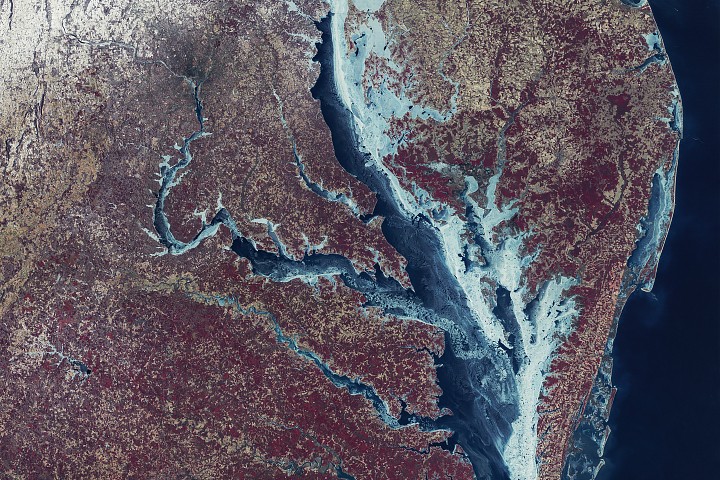
The Freeze on the Chesapeake
Cold air masses from the polar vortex collide with the surface of the Chesapeake Bay. This interaction lowers the temperature of the top layer of water.
Molecules of H2O slow down until they lock into crystalline structures. The salinity of the bay varies from north to south. Fresh water at the Susquehanna mouth turns to solid ice at zero degrees Celsius. Saltwater near the Atlantic Ocean requires much colder conditions to freeze. This physical property prevents the southern mouth from closing while the northern channels remain locked.
Coast Guard icebreakers utilize 140-foot vessels to maintain access to the Port of Baltimore. The Cutter Chock and the Cutter Cleat ram their bows into the sheets of ice to create pressure ridges.
No joke the sound of steel hitting the frozen surface carries for miles across the silent marshes. These paths allow tugboats to push barges filled with heating oil and road salt. If these lanes close the price of energy for regional residents spikes within forty-eight hours.
Climate models for the spring of 2026 indicate a rapid thaw due to a shift in the jet stream.
Warm air from the Gulf of Mexico will travel north to meet the frozen basin. This shift creates a risk of localized flooding as the ice melts and the river runoff increases. Engineers monitor the Conowingo Dam to manage the flow of debris and silt. The sudden influx of fresh water can temporarily alter the chemistry of the bay and impact the spawning grounds of striped bass.
I’m convinced that the physical barrier of the ice serves as a reset for the underwater environment.
It’s a tough pill to swallow for the watermen who lose weeks of income during the freeze. However the cold kills off invasive species like the blue catfish that thrive in warmer temperatures. This natural culling helps maintain the balance of the ecosystem for the coming summer months. Predators and prey alike adjust their behavior to the lack of surface movement.
Historic records from the winter of 1977 show that the bay froze almost entirely from shore to shore.
People drove cars across the ice to reach islands. Today the increase in average global temperatures makes such a total freeze a rare event. The current 2026 freeze represents a temporary return to these historical patterns rather than a permanent shift. Satellite data confirms the crust is already beginning to crack in the southern reaches.
Did you ever wonder
The depth of the ice determines the oxygen levels for the blue crabs buried in the mud.
If the ice remains for too long the oxygen cannot enter the water from the air. Future technology may use autonomous drones to measure ice thickness without risking human life on the frozen surface. This data will allow scientists to predict the health of the crab harvest months in advance. The survival of the crustacean population depends on the duration of the freeze and the thickness of the shelf.
This knowledge will guide harvest regulations for the 2026 season and help stabilize the local economy.
Bonus Track: The Great Freeze of 1977
The winter of 1977 remains the benchmark for extreme conditions on the Chesapeake Bay. Thick ice allowed residents to walk between the mainland and the islands.
Smith Island was cut off from the mainland for weeks. The National Guard used heavy helicopters to ferry fuel and groceries to the trapped population. This event led to better communication systems and emergency protocols for the region.
 Humans Develop Cocoa-Honey Nutritional Compound In Zurich Laboratory
 99% Reduced Latency