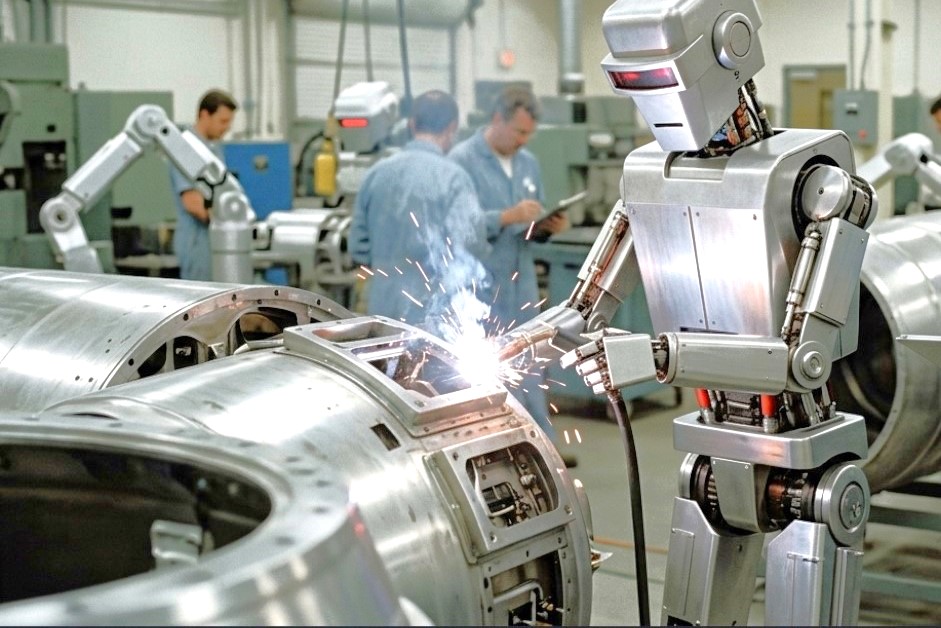
In the heart of the Texas manufacturing landscape, a profound transformation is taking place. Tesla is moving away from its older luxury vehicle models to make room for the Optimus humanoid robot.
By repurposing the floors once used for cars, the company is betting its future on a machine that can perform the chores of daily life. This is not just a change in product; it is a change in identity.
The factory of the future no longer builds the car; it builds the driver.
While manufacturing evolves, the retail sector is pursuing a similar mechanical integration within the digital marketplace. Amazon is quietly placing a metallic footprint in millions of homes and warehouses.
With the acquisition of Fauna Robotics, the retail giant is moving toward a world where machines are friendly and approachable.
They already manage a massive fleet of a million robots to move packages with speed.
When a robot enters the home, the boundary between technology and family thins.
Amazon is turning its massive financial reserves into a physical presence in our living rooms.
Financial analysts see a market that could reach a $375 billion valuation as these two giants compete for dominance. While Tesla builds its technology from the ground up, Amazon uses its deep pockets to buy innovation and scale.
Both companies want to create an ecosystem that is impossible to leave, much like the smartphones we carry today.
The race for the first trillionaire might very well be won by the person who puts a robot in every house.
Profit is moving from the screen to the street.
Reality Check
Despite this massive market potential, the path forward is defined by significant friction. Success in this field depends on more than just vision; it requires clearing massive legal and regulatory hurdles.
There is always the chance that the actual performance of these machines will fall short of the grand promises made on stage.
High-margin software updates only work if the hardware remains reliable and safe for public use. If the technology falters, the massive investment could become a heavy burden.
The path to a multi-billion dollar industry is paved with difficult technical challenges.
Zoom Out
While technical challenges persist, the broader implications for society and the global labor story are equally significant. Beyond the stock prices and the corporate competition, we are witnessing a shift in the nature of work. As these machines take over tedious tasks, the very nature of human work will change across every continent.
This movement is supported by an “Indispensable Monopoly” that provides the silicon chips needed by the entire industry.
We are watching the birth of a new era where artificial intelligence finally gains a physical body. The world is becoming a place where the heavy lifting is done by those who never tire.
Humanoid Realities in the Modern Marketplace
This global shift is supported by specific industrial milestones and regional expansions currently taking shape across the globe:
- Current Timeline: By mid-2026, major pilots for retail-ready humanoids have begun in select cities across North America.
- Places of Interest: Oregon is home to the “Robofab” facility, where Agility Robotics is producing the Digit robot at scale.
- Technological Milestone: Boston Dynamics has transitioned its famous Atlas robot to a fully electric platform for commercial use.
- Additional Read: “The Rise of General Purpose Robots” by IEEE Spectrum offers a deep view of current sensor capabilities.
- New Market Entry: Figure AI has recently secured partnerships to bring intelligent workers to automotive assembly lines in South Carolina.
The Connection Between Silicon Minds and Metal Limbs
These logistical developments are underpinned by a fundamental synergy between artificial intelligence and physical dexterity. How do these developments change our world?
When we observe the data from the Stanford AI Index, it becomes clear that the physical application of intelligence is growing faster than software alone.
I see this as a bridge between the digital void and our tangible reality.
Why does Amazon need a home robot when they already have a speaker in every room? The answer lies in physical agency.
A speaker can tell you the weather, but a robot can bring you an umbrella.
By connecting the brain of a large language model to the hands of a humanoid, these companies are solving the problem of physical presence.
Is the world ready for a neighbor that never sleeps?
This is the question that defines our decade.
Tracking the Journey of Intelligent Machines
The timeline for this integration is already being established through a series of key technological and commercial milestones:
- Late 2024: The second generation of Tesla Optimus demonstrated improved balance and delicate object handling.
- Early 2025: Amazon began full-scale integration of humanoid workers into its sorting facilities.
- Late 2025: NVIDIA released Project GR00T, a foundational model designed specifically for humanoid robot learning.
- April 2026: Public demonstrations of home-security robots show advanced navigation in complex suburban environments.
- Late 2027: This remains the target window for the first commercial sales of Tesla’s robotic units to the general public.
 Protein FTL1 Linked To Reversible Cognitive Decline